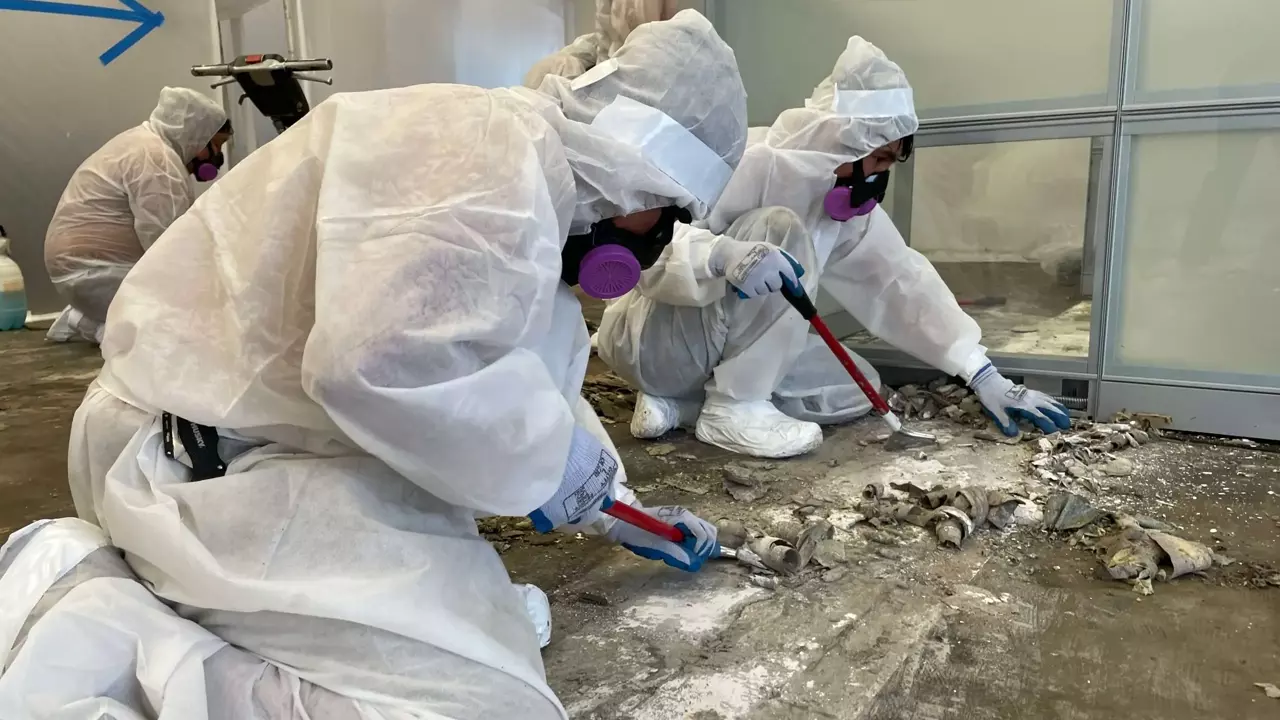

If you need:
- to remove more than 10 m² of non-friable asbestos flooring, a licensed asbestos removalist is required from 4 April 2016. Current Certificate of Competence holders can work until April 2018
- for drilling non-friable asbestos, see the guide to control dust and fibers

Preparing the work area
- Ensure safe access to the work area.
- Restrict access and limit people.
- Close doors and post notices.
- Restrict access behind asbestos board if possible.
- Inform others of contamination.

Keep dust down
Use plastic sheets to cover your work area to help stop the spread of dust. They will also make cleaning up easier.

Use the right protective equipment
Wear a mask:
- Not all masks protect from asbestos.
- Use a disposable P2 mask with a valve; P1 or dust masks aren't sufficient.
- Don't re-use disposable masks.
- Ensure proper fit; facial hair and stubble prevent a good seal.

Wear overalls:
- Disposable overalls will stop the tiny asbestos fibres getting on your clothes.
- Don’t re-use disposable overalls.
- Wear the overalls one size too big as it will help prevent ripping at the seams.
- Make sure you put the legs of the overalls over the top of your footwear – don’t tuck them in as it lets in dust.
Procedure
Caution: Don’t sand the floor under asbestos-containing flooring.

Put on the mask and overalls and make sure they fit properly.

Protect nearby surfaces from contamination.

Place a scraper in the joint between the tiles.

Lift the flooring gently – try to avoid breakage.

For firmly-fixed flooring, tap the scraper with a hammer.

For larger areas, lift the flooring using a shovel. This speeds up the job and avoids kneeling close to the flooring.

Spray water under the flooring as you lift it up, to suppress dust.

Wet any asbestos paper backing as you lift the flooring.

Gently scrape up mastic. You can soften mastic with solvent.

Place debris in the waste container.

Clean up properly
It’s really important to clean up properly so that you safely remove and dispose of the asbestos waste.

Work area and tools:
- Clean up continuously to prevent waste buildup.
- Wipe tools and surfaces with a damp cloth; dispose of cloth as asbestos waste.
- Avoid sweeping to prevent spreading fibers.
- Use a vacuum with a fine particle filter, not a domestic vacuum.

Personal clean-up
- Dispose of disposable masks and overalls safely after you have finished the job. The mask and overalls are asbestos waste.
- Don’t take overalls home or wear them in vehicles. This will prevent people at home being exposed to asbestos fibres.

Disposal
- Make sure all waste, including masks, overalls, cloths and plastic sheets are double-bagged in heavy-duty plastic bags, sealed with tape and marked as asbestos waste.
- Dispose of the asbestos waste at an authorised disposal site. Contact the local tips in your area to find one that accepts asbestos waste.
Finishing the job
Visually inspect the area to make sure it has been cleaned properly.