
Knowby
Drilling non-friable asbestos with thickener
This safe work procedure describes the safe work procedure for drilling holes into non-friable (bonded) asbestos-containing material (ACM) such as fibro, hardiplank, compressed sheeting and tilux using a thickened substance (such as shaving foam) to control airborne fibres and dust.
1
Step 1 of 15

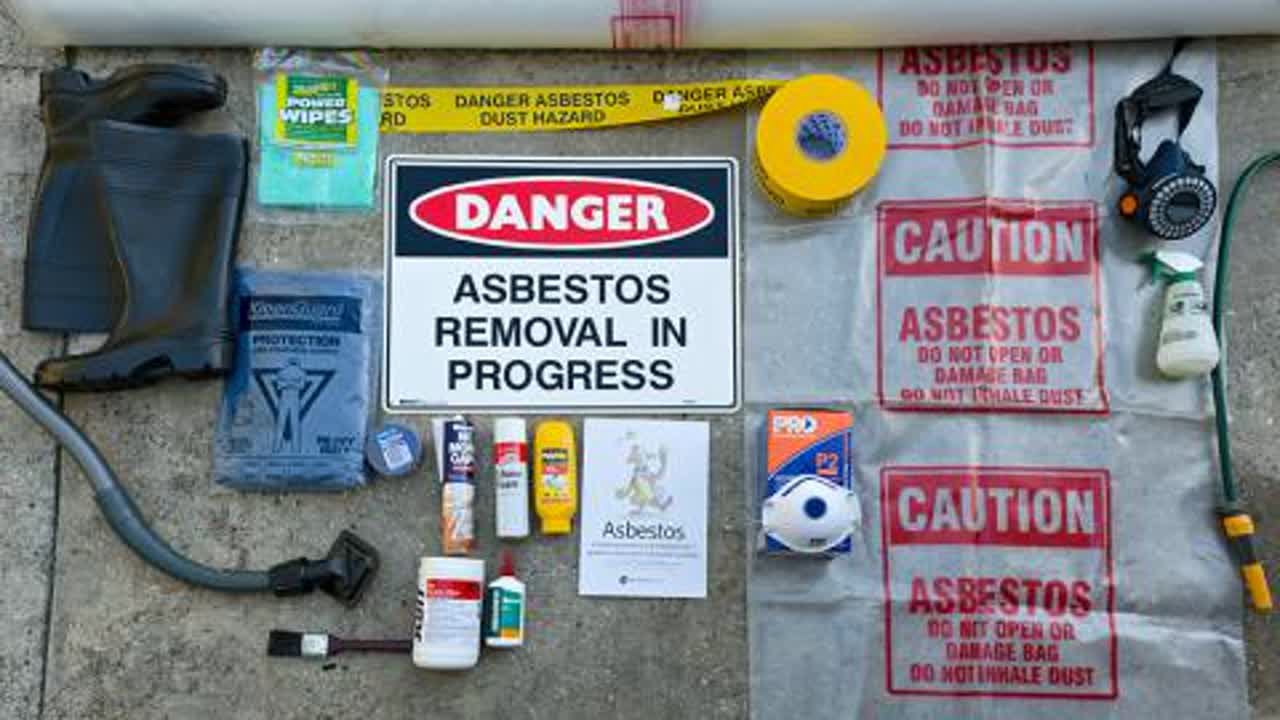
To control asbestos exposure, use:

  • 200 μm plastic sheets
  • Duct tape
  • Labeled bags (1200x900 mm, 200 μm)
  • Warning signs
  • Barricade tape
  • Water bucket, atomiser
  • Cordless/hand drill
  • Drill bits
  • Tape measure
  • Disposable cups
  • Thickened substance
  • Rags/wipes
  • PVA glue, brush
  • Marker pen
  • First aid kit
  • Spare PPE
  • Lace-less boots
2
Step 2 of 15
<p>Place duct tape over intended drilling point. Mark the proposed hole for drilling on the duct tape.</p>

Place duct tape over intended drilling point. Mark the proposed hole for drilling on the duct tape.

3
Step 3 of 15
<p>Apply shaving cream around the proposed drilling point, creating a circle of shaving foam around the area to be drilled. This will help capture any loose dust and debris.</p>

Apply shaving cream around the proposed drilling point, creating a circle of shaving foam around the area to be drilled. This will help capture any loose dust and debris.

4
Step 4 of 15
<p>Pre-drill a transparent plastic cup (or polystyrene cup) with the same drill that will be used on the ACM and fit onto the drill bit. Place the drill bit through the cup, with the bit towards the top of the cup and extending beyond the cup (drill with hand drill or low-speed battery powered drill).</p>

Pre-drill a transparent plastic cup (or polystyrene cup) with the same drill that will be used on the ACM and fit onto the drill bit. Place the drill bit through the cup, with the bit towards the top of the cup and extending beyond the cup (drill with hand drill or low-speed battery powered drill).

5
Step 5 of 15
<p>Fill the cup with shaving foam until slightly overflowing.</p>

Fill the cup with shaving foam until slightly overflowing.

6
Step 6 of 15
<p>While holding the drill and the cup, place the point of the drill bit on the marked drilling point. Slide the cup with the shaving foam down the drill bit and proceed to drill the hole at low speed.</p>

While holding the drill and the cup, place the point of the drill bit on the marked drilling point. Slide the cup with the shaving foam down the drill bit and proceed to drill the hole at low speed.

7
Step 7 of 15
<p>After the hole is drilled, remove the plastic cup and dispose of it in an approved asbestos waste bag which is correctly labelled and is 200 µm thick. The asbestos residue will be captured in the shaving cream around the drilled hole.</p>

After the hole is drilled, remove the plastic cup and dispose of it in an approved asbestos waste bag which is correctly labelled and is 200 µm thick. The asbestos residue will be captured in the shaving cream around the drilled hole.

8
Step 8 of 15
<p>Wet wipe the shaving foam once over.</p>

Wet wipe the shaving foam once over.

9
Step 9 of 15
<p>Remove the wipe from the wall.</p>

Remove the wipe from the wall.

10
Step 10 of 15
<p>Fold the wipe in half and wipe the wall down again. Folding the wipe again and re-wiping the foam and residue again leaving a clean surface, and dispose of the wipe in a approved plastic asbestos waste bag.</p>

Fold the wipe in half and wipe the wall down again. Folding the wipe again and re-wiping the foam and residue again leaving a clean surface, and dispose of the wipe in a approved plastic asbestos waste bag.

11
Step 11 of 15
<p>Using a new wipe, wet wipe the drill bit to decontaminate it. Dispose of the wipe in an approved asbestos waste bag which is correctly labelled and is 200 µm thick.</p>

Using a new wipe, wet wipe the drill bit to decontaminate it. Dispose of the wipe in an approved asbestos waste bag which is correctly labelled and is 200 µm thick.

12
Step 12 of 15
<p>Decontaminate the cordless drill using a clean wet wipe. Dispose of the wipe in an approved plastic asbestos waste bag.</p>

Decontaminate the cordless drill using a clean wet wipe. Dispose of the wipe in an approved plastic asbestos waste bag.

13
Step 13 of 15
<p>Decontaminate any other tools used in the drilling process using another clean wet wipe. Dispose of the wipe in an approved plastic asbestos waste bag.</p>

Decontaminate any other tools used in the drilling process using another clean wet wipe. Dispose of the wipe in an approved plastic asbestos waste bag.

14
Step 14 of 15
<p>Use PVA glue, paint or similar to seal the edges of the drilled hole. If a cable is to be passed through the hole, insert a sleeve to protect the inner edge of the hole from fraying when feeding in the cable.</p>

Use PVA glue, paint or similar to seal the edges of the drilled hole. If a cable is to be passed through the hole, insert a sleeve to protect the inner edge of the hole from fraying when feeding in the cable.