
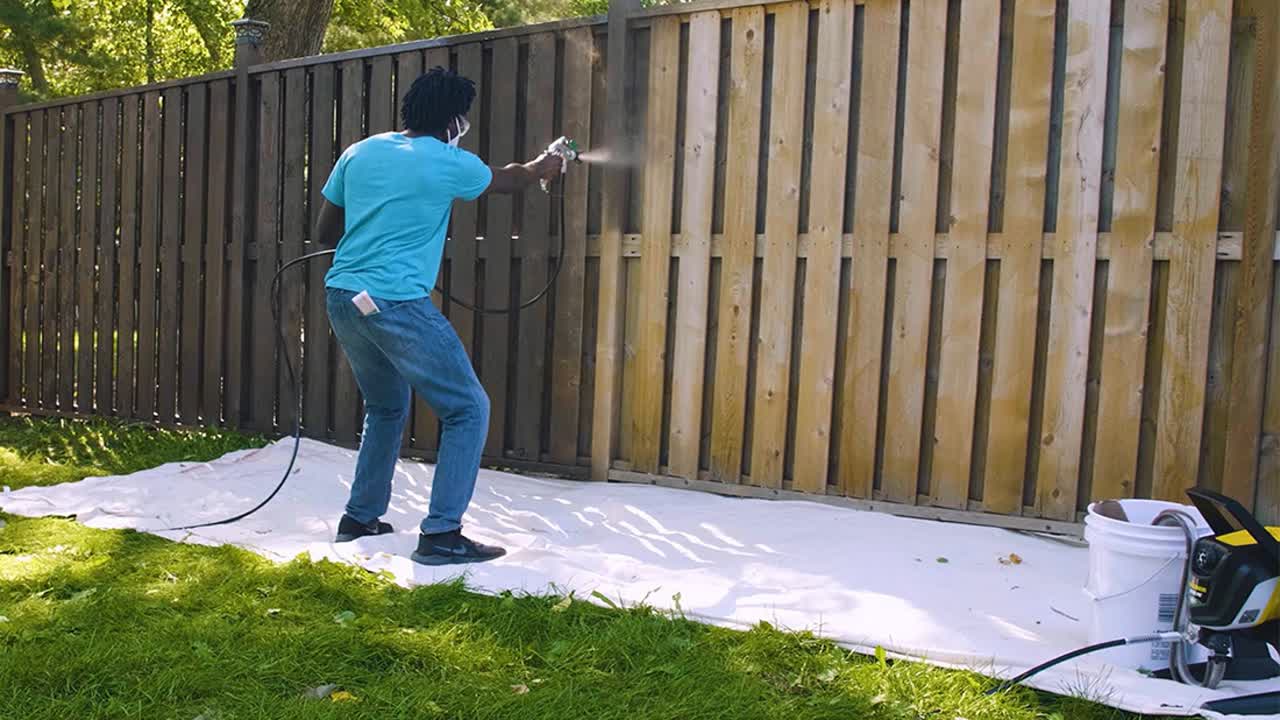
Before painting, check the weather forecast. Optimal conditions include warmer weather, not just on the painting day but also the day after, ensuring even paint curing.
Give the fence a thorough cleaning to remove dirt and cobwebs, paying attention to tight nooks and crannies.
Stir the paint can thoroughly to mix the tint evenly. Pour the stirred paint into a container, topping up with 10% water to thin it for spraying.
Before painting the fence, test the sprayer on a piece of cardboard to ensure proper functionality.
Adjust the nozzle orientation (vertical or horizontal) based on the direction of fence panels. Change the nozzle angle between coats to reach all areas.
Use masking tape to protect the edges.
Modify the nozzle to direct pressure for tight areas underneath rails. Use cardboard to prevent overspray on neighboring fences or plants.
For obstructions, wrap foliage with garden mesh and cable ties before spray-painting.
After the first coat dries, apply a second coat. Thoroughly clean all equipment after finishing the painting process.
Your fence is now beautifully painted, enhancing its appearance and protection.