
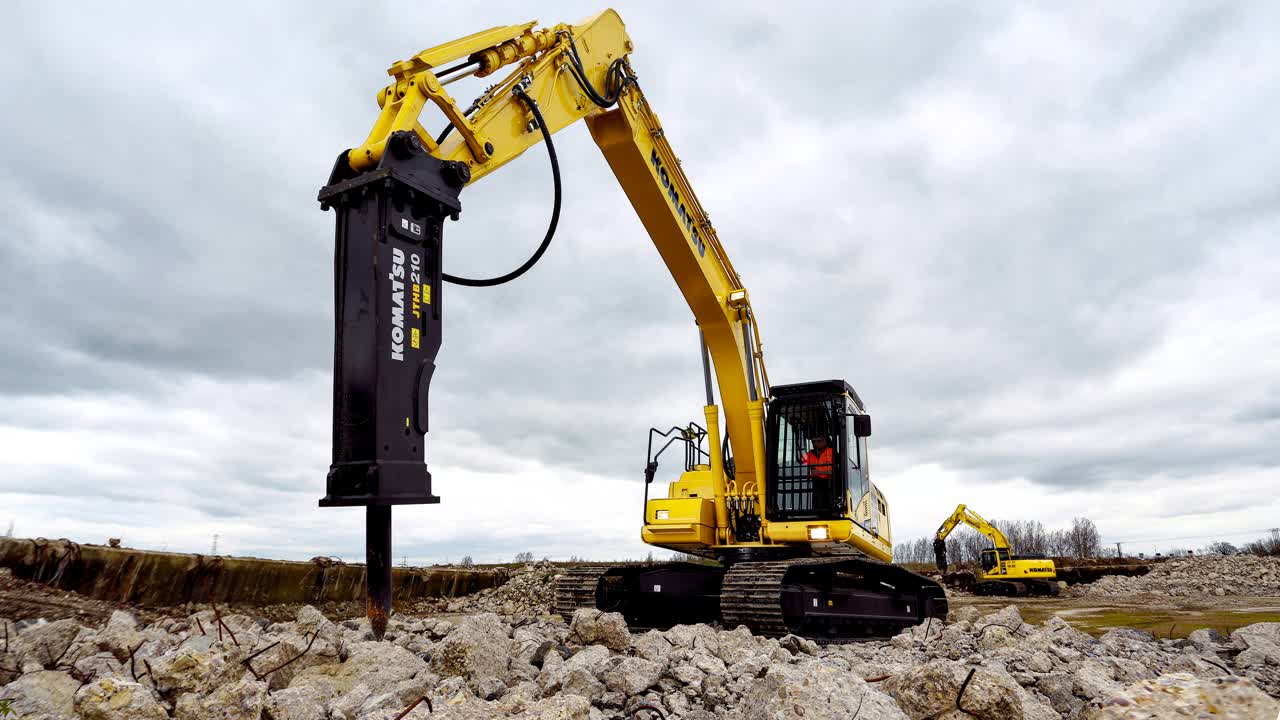
Eight Tips for Efficient Komatsu Hydraulic Breakers
This guide covers eight crucial rules for operating hydraulic breakers, including avoiding blank firing, proper use, safe operation, protecting cylinders, cold weather procedures, moving the tool frequently, avoiding overheating, and preventing water immersion.
This guide covers eight crucial rules for operating hydraulic breakers, including avoiding blank firing, proper use, safe operation, protecting cylinders, cold weather procedures, moving the tool frequently, avoiding overheating, and preventing water immersion.
1
Step 1 of 9Blank Firing
Avoid Blank Firing
- Blank firing occurs when there is no object to absorb the breaker's force.
- It causes extensive wear and tear to the tool and components.
- To prevent blank firing, stop the breaker before the material separates.
2
Step 2 of 9Appropriate Use
Use Breakers for Intended Activities
- Not all breakers are designed for maneuvering rocks.
- Check with the manufacturer for specific uses.
- Breakers for rocks usually have a rock hook or protective structure.
3
Step 3 of 9Safe Operation
Avoid Lifting or Prying
- Do not use the tool or breaker to lift or pry.
- It’s dangerous and can damage the breaker, tool, and bushings.
4
Step 4 of 9Excavator Cylinders
Protect Excavator Cylinders
- Do not allow the excavator cylinders to reach the end of their stroke.
- This position does not tolerate breaker vibrations well.
5
Step 5 of 9Cold Weather Operation
Warm Up in Cold Weather
- Always warm up your equipment properly before operating in cold weather.
- Store the breaker inside during extremely low temperatures.
6
Step 6 of 9Move the Tool
Move the Tool Frequently
- Move the tool to new positions often.
- This helps avoid powder buildup under the tool and improves shock wave travel.
7
Step 7 of 9Avoid Overheating
Limit Time on One Spot
- Never let the breaker strike the same spot for more than 15 seconds.
- Prolonged use in one spot causes heat buildup, reducing tool strength and wear resistance.
8
Step 8 of 9Water Immersion
Do Not Immerse in Water
- Do not immerse the breaker in water or mud to a depth where the tool is not visible.
- For underwater use, contact your dealer for an air pressurization kit.