Knowby
Cloudy Bay Vineyards
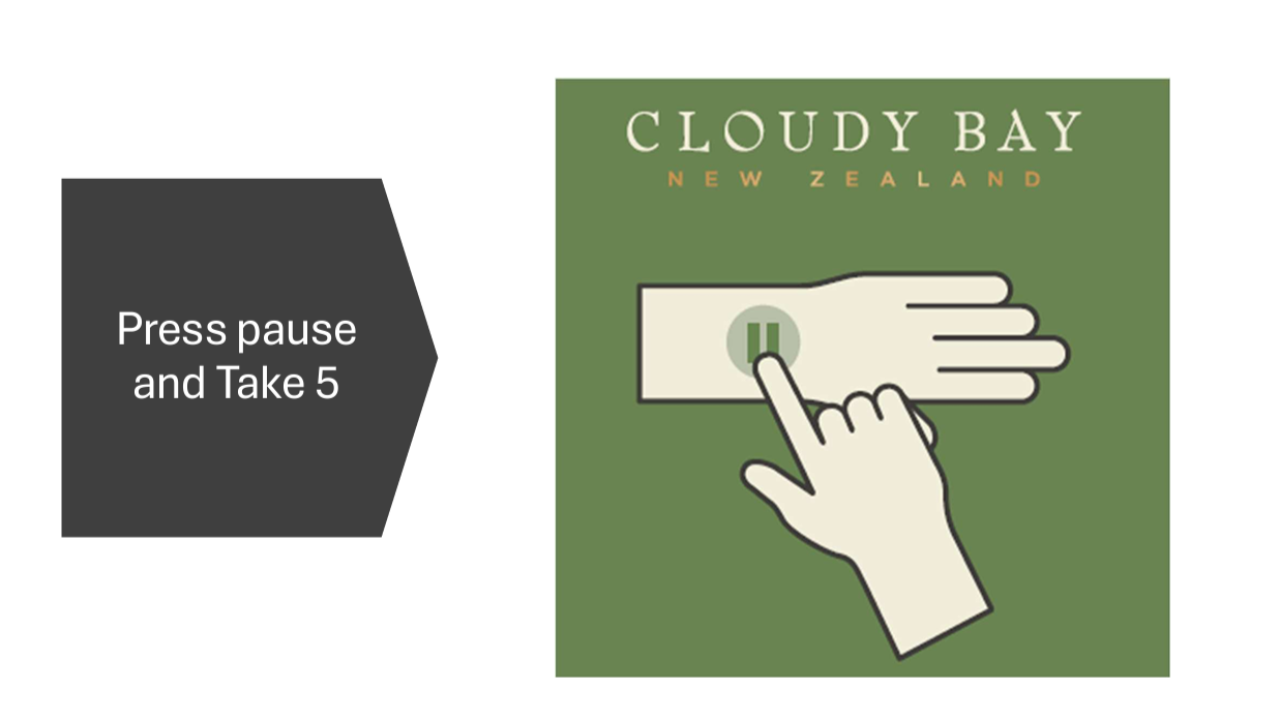
Pause & Take 5
Knowby created from browser extension capture session at 26/05/2026, 3:44:00 pm
Knowby created from browser extension capture session at 26/05/2026, 3:44:00 pm
1
Step 1 of 10
Welcome to the Cloudy Bay "Press pause and take 5".
2
Step 2 of 10
This is a tool to help you understand the task you are doing at the time you are doing it.
It helps you to identify and control hazards that could injure you or others and it helps reduce human error.
3
Step 3 of 10
We have learned that error is normal. We've learned that blame fixes nothing; context drives behaviour; how the responses of our leaders matters when things go wrong and that learning is essential.
We've learned that 90% of events begin with human error.
4
Step 4 of 10
So, its important to know what error is. The key point is that error is an action or inaction that unintentionally creates conditions for an outcome that can cause harm or damage.
We also know we work in different performance error modes. In skill-based performance mode the task needs to be simple and you need to be doing it very regularly. Its not that common. At the opposite end of the scale is knowledge-based perormance where your chances of error are 10-50%. We want to avoid this mode.
5
Step 5 of 10
Your brain is amazing but uses a lot of energy. To get over that it has a low power always on mode that is super-fast but doesn't think consciously. That can be good when you know a task well but if you don't that can be dangerous.
When we do a take 5 we want to be very aware and switched on. We need the intentional high energy System 2 to kick in.
6
Step 6 of 10
When we do a Take 5 we access System 2 by saying out loud "I am pressing my pause button" and touching our imaginary pause button on our wrist.
7
Step 7 of 10
When we think about the task we need to be sure we really know what we are doing. If we don't we could get hurt. We know that we can't think our way out of a situation where we dont know what we dont know.
So, when we feel it in our gut, scratch our heads, rub our chins and say "I think, I'm pretty sure, or I believe". Know you are in trouble and it is time to seek help from an expert, an SOP or manuals. Something outside ourselves.
8
Step 8 of 10
Use your best efforts to identify the hazards in your environment and your task. You'll get close to half. Then use your Energy Wheel to see what else might be hidden that could hurt you.
You or the team may have some knowledge about this task or place or time. Maybe it's a block with angled rows, maybe it's been raining recently and the creek is overflowing. Maybe the floor is often slippery here. How will you use that knowledge?
9
Step 9 of 10
Time to think about which hazards could really hurt or kill me or others. The STKY risks. Am I confident I have them under control. Am I sure? Do I need outside help. How about the smaller stuff? Is it under control? Is there a way to remind myself about the tricky aspects of the task and how to keep things running smoothly?
10
Step 10 of 10
You did the job. It all went well. But could it have gone better? Is there something that doesn't make sense? Is there something that feels dangerous? Has something changed since last time? Is there something that just makes things difficult?
Bring it back to the team, to your supervisors and managers? Maybe the process can be improved. Lets aim for excellence.