
Knowby
Reading Filter Pressures
How to correctly read Differential Pressure (Dp) and understand when a filter may be blocked.
1
Step 1 of 6
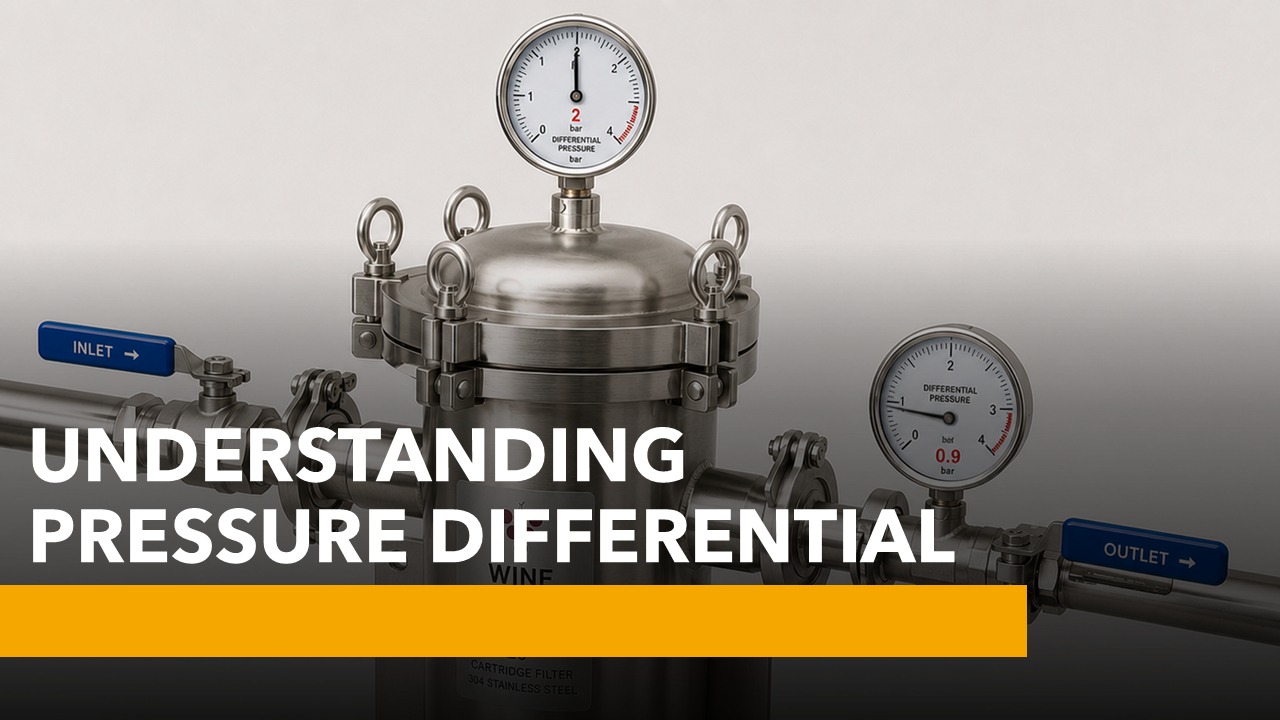
<h3>Typical Filter gauge set up</h3><p></p><p><span style="color: rgb(43, 32, 38);">Two pressure gauges — one on the inlet (before or on top of the filter housing) and one on the outlet (after the filter housing).</span></p><p><span style="color: rgb(43, 32, 38);">The difference between these two readings is the 'Differential Pressure', or “dP.”</span></p><p></p><blockquote style="background-color: var(--k-quote-bg-success);"><p><span style="color: rgb(43, 32, 38);">✔️ Think of it as the effort the pump must exert to push wine through the filter media. A clean filter offers little resistance — a loaded filter offers a lot.</span></p></blockquote><p></p>

Typical Filter gauge set up

Two pressure gauges — one on the inlet (before or on top of the filter housing) and one on the outlet (after the filter housing).

The difference between these two readings is the 'Differential Pressure', or “dP.”

✔️ Think of it as the effort the pump must exert to push wine through the filter media. A clean filter offers little resistance — a loaded filter offers a lot.

2
Step 2 of 6
<p>This graph show the decline in flow rates as the filters get blocked.</p><p>As production continues the filters will block rapidly which will result in a decline in production rates.</p>

This graph show the decline in flow rates as the filters get blocked.

As production continues the filters will block rapidly which will result in a decline in production rates.

3
Step 3 of 6
<p>This is the general rule of thumb for filter differential pressure before it causes a decrease in flow rates.</p>

This is the general rule of thumb for filter differential pressure before it causes a decrease in flow rates.

4
Step 4 of 6
<h4><strong>To read the dP -</strong></h4><ul><li><p>Ensure there is flow through the housing</p></li><li><p>Read the inlet pressure gauge (1)</p></li><li><p>Read the outlet pressure gauge (2), this may be located on top of the next filter housing</p></li><li><p>Gauge 1 - Gauge 2 = dP</p></li></ul><blockquote style="background-color: var(--k-quote-bg-neutral);"><p>Example:</p><p>Inlet = 2.0bar</p><p>Outlet = 0.9Bar</p><p>dP= <strong>1.1Bar</strong></p></blockquote><p></p>

To read the dP -

  • Ensure there is flow through the housing

  • Read the inlet pressure gauge (1)

  • Read the outlet pressure gauge (2), this may be located on top of the next filter housing

  • Gauge 1 - Gauge 2 = dP

Example:

Inlet = 2.0bar

Outlet = 0.9Bar

dP= 1.1Bar

5
Step 5 of 6
6
Step 6 of 6

Key Takeaways

  • Monitor and record the differential pressure regularly

  • Once the filters start to block they will continue to block rapidly and decrease flow rates

  • If you see the pressure increase to the threshold limits notify your Supervisor

  • Change out when possible before it starts to affect production rates

  • All filters should be checked

Remember: Only check pressure when there is flow passing through filters