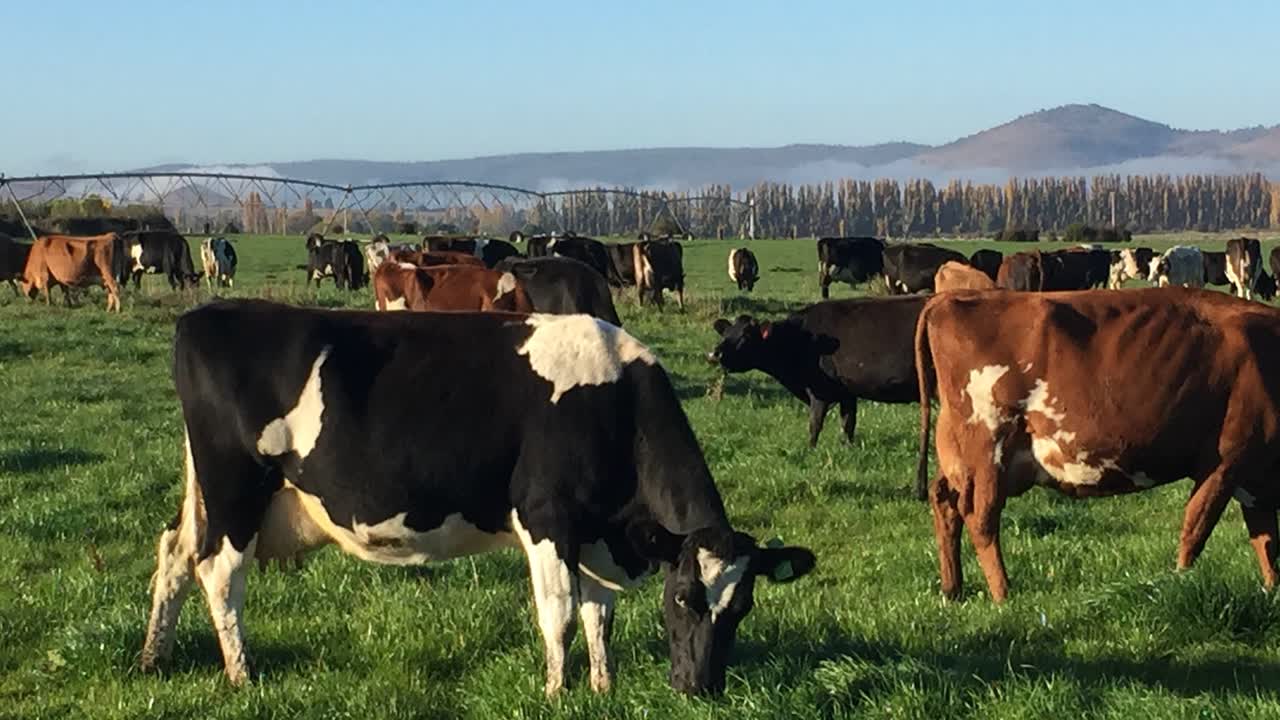
Minimising the effects of transition has a massive benefit in how quickly cows peak ( and how high) and return to cycling.

Getting cows in the ideal BCS is a key part of this:
5.5 for R2 and R3 animals
5.0 for mixed aged cows
Too fat and they are a higher disease risk.
Too thin and they’ll always be behind the mark.

Ensure all vaccines are given at the correct time.
Selenium ( I prefer SeB12) needs boosted pre calving for both the immune system and to reduce retained membranes.
Give this to the whole herd when you create your first springer mob (unless you know your late calvers) and give a second shot to those that haven’t calved 5 weeks later.
Ensure springing cows are on lead feed for at least 14 days.
Draft on both due date AND udder development. Crossbred cows are calving consistently before due date as a rule.

make sure they have access to 1 - 2 kg silage and keep this going right through including in the milkers (as lib access to colostrum cows is strongly recommended).
It is important for the rumen that the diet is as consistent as possible as we move through transition.

Access to 2-4 kg grass depending on milk fever incidence. Again keeping the same feed in the diet for consistency.

Ad lib access to hay / straw to springers is important so they aren’t hungry as this is a massive stress to them. BUT do an energy diet as they want fed to 100% of requirements not over fed.
This equates to around 90-100mjME for a good crossbred cow in the right BCS.
Getting this right pre calving has a big impact on how quickly cows recover and return to good rumination rates post calving.
Post calving the key is to get them up and eating as much as possible as quickly as possible.
Evidence shows cows that recover rumination rates quickly peak higher and return to cycling earlier.
This is basically because they return to a positive energy balance quicker.
The aim is to get them ruminating at 450 minutes a day as quickly as possible.
There a a number of tools available to achieve this that can be used on farm.

Day zero is critical.
Ideally you pick up calves twice a day ( or more) and get them into the colostrum routine as soon as possible.
Next best with Halter is to pause collars so they can walk over to w break fence. They don’t respond to this as well as being in the colostrum mob but it’s better than leaving them in the springer mob.

Offering extra calcium to springers is a good tool as their requirements have risen greatly.
Via feed systems with a calcium pellet or calciprills is ideal.
Calcium is needed for milk production and smooth muscle contraction (think uterus involution and rumination).
Ensure as herd sizes vary you vary the allocation . Underfeeding cows via poor allocation shows up in low rumination rates immediately on collars. Having good systems people understand helps a lot with this.
Not pushing colostrum cows hard is another key tool.
This isn’t the mob to hit residuals!
Leaving 1800 is a good target.
OAD milking reduces energy requirements. Less milk, less walking and more time eating. It also decreases the calcium demand.
Using this as a tool in the colostrum mob is a key tool.
It also allows more time in the day to deal with other farm work.
Multiple moves of the colostrum mob is another key tool.
Cows always get up and eat when you wind up the fence!
Halter makes it easy to move this mob 4-8 times a day and this drives intake.

Ad lib silage in a feeder near the gate is another key tool.
Getting the feeding right will not only drive production and reproduction but also minimise disease issues.
But there are a number of transition diseases you will encounter.


A number of these sick cows will go onto develop metritis.