
Sick calves are always a risk to human health. Wear gloves. Wash hands thoroughly after.
Any calf that doesn’t drink should be a candidate for examination. The only exception would be to mark and record it and check later in the day to see if it will drink then or need examination.

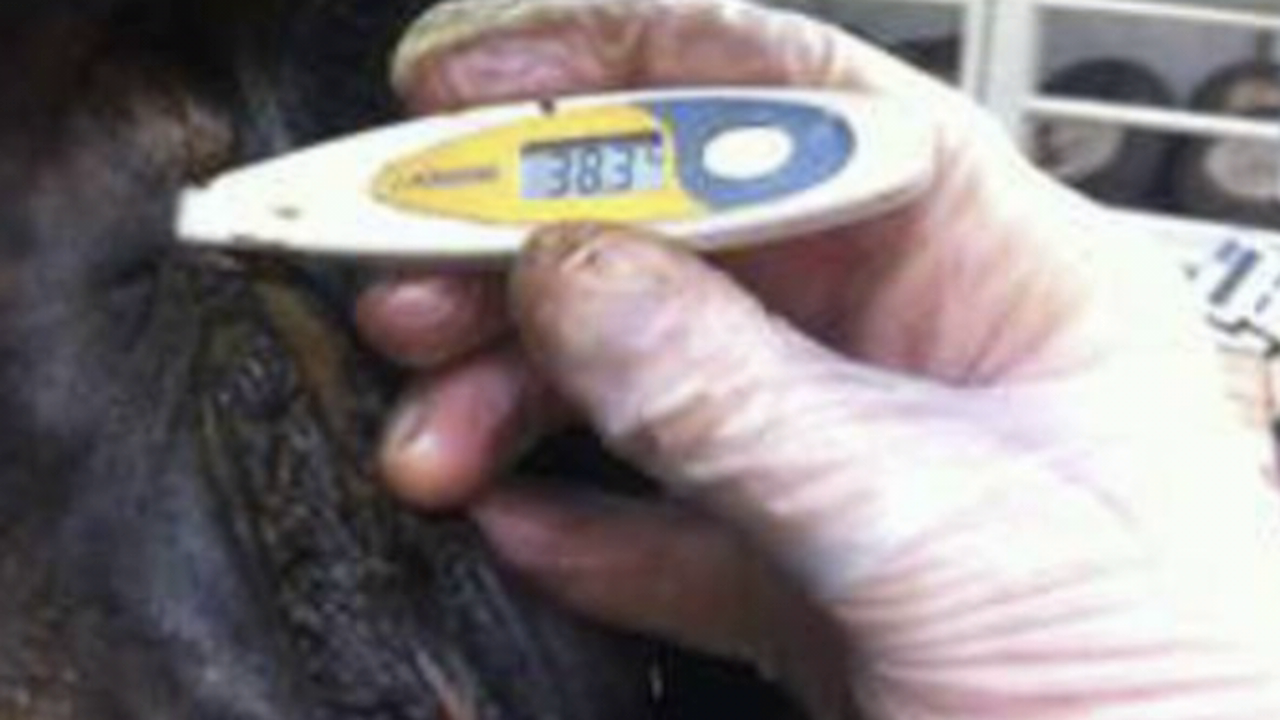
Take the calf temperature. Above 39.5 indicates fever.
Pinch a fold of skin on the neck, rotate it 90 degrees, and then count the number of seconds it takes to flatten out. If the skin takes more than three seconds to return to normal, the calf is considered dehydrated. It must be treated with electrolytes.

Observe back end for signs of scours and note if blood is present.

Is the calf breathing heavily ( compare it to other calves )? Is it coughing?
Observe the eyes and nose. Are they weeping? Are the eyes sunken?
look in the mouth. Is it normal?