
Introduction:
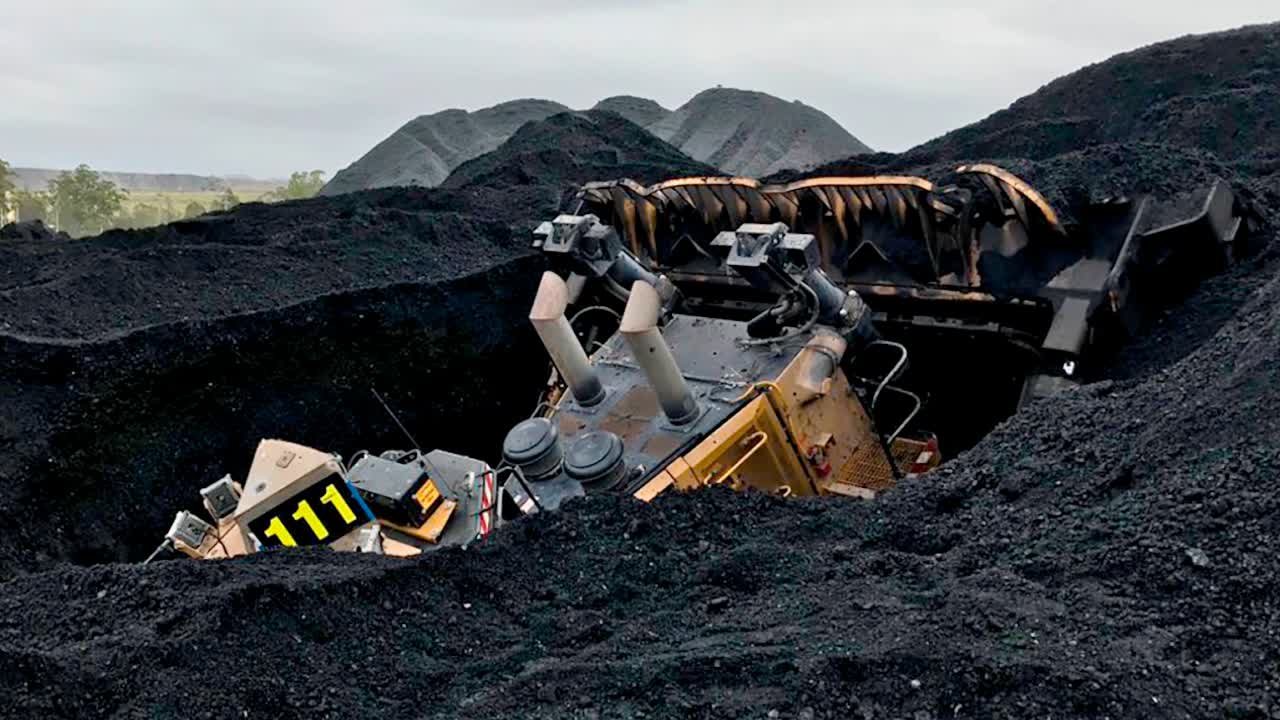
Pushing coal on a surge pile is extremely dangerous. Nineteen miners have died in surge pile accidents since 1980, with many close calls.
Accident Scenario:
Bulldozers can fall into hidden cavities where coal has bridged over an underground feeder. Coal covers the machine, breaking windows and filling the cab with coal.
Protection Methods:
Two ways to protect operators are: providing cab windows strong enough to withstand burial pressure, and using remotely-controlled equipment.
MSHA Testing:
High-strength glass can withstand burial pressure in surge pile accidents. This was demonstrated through both laboratory and full-scale field tests.
Source of Glass:
The high-strength glass used is manufactured by PPG Industries and was originally developed for use in cockpit windows of the F-111 fighter jet.
Demonstration Setup:
Caterpillar D9 Dozer with high-strength windows was used. A ramp was made on the back side of the stockpile, and the dozer was covered in coal increments using a D11.
Verification of Glass Strength:
High-strength glass is produced with a special manufacturing process. The glass was verified to withstand 20 psi burial pressure, equivalent to 35 feet of coal.
Purpose of Strong Cab Windows:
The purpose of strong cab windows is to provide a "safe refuge" for the operator during an accident, ensuring their safety in surge pile operations.
Rescue Strategy:
Mines should have plans for equipment excavation. Start removing coal from the side of the cavity to avoid breaking cab windows during rescue operations.
Operators’ Feedback:
Operators believe high-strength glass could save lives despite the cost. Various operators have expressed positive responses about its potential benefits.
Remote Control Equipment:
Using remotely-controlled equipment can remove operators from potential danger. This approach is already used in other industries and is a valid alternative.
Best Practices:
Provide two self-rescuers and emergency lighting in equipment. Install gates on feeders, use TV cameras for real-time observation, and identify feeder locations with markers.
More Best Practices:
Install lights to indicate active feeders, allow operators to shut down feeders and belts from the cab, avoid operating over feeders, and ensure communication between workers.
Training and Safety:
Prohibit walking on the pile, keep equipment facing the feeder near the drawhole, and provide hazard training, especially for new workers and contractors.
Additional Resources:
For more information on surge pile safety, visit MSHA's web page