
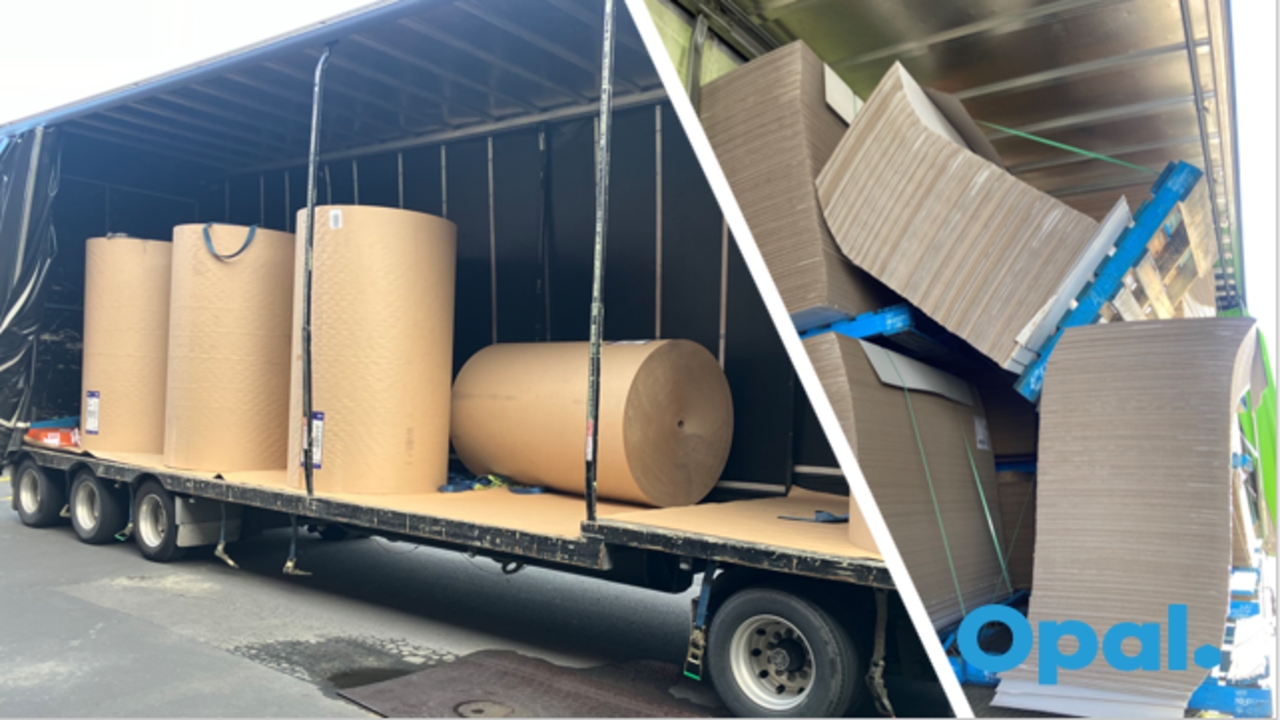
Opal Standard for Unloading Fallen or Collapsed Freight
This procedure establishes a standard for the safe unloading of freight that has fallen, shifted, or collapsed, including palletised and non-palletised loads, within tautliner trailers and shipping containers.
This procedure establishes a standard for the safe unloading of freight that has fallen, shifted, or collapsed, including palletised and non-palletised loads, within tautliner trailers and shipping containers.
1
Step 1 of 8Define and Secure the Unloading Zone
- Notify the despatch manager
- Tautliners: Ensure the truck is positioned in a safe location, away from traffic and pedestrians. Reposition the truck if necessary to minimise risks.
- Containers: Ensure all site container dock securing processes are implemented, including chocking the truck's wheels to prevent movement.
- Set up an exclusion zone around the working area, including the potential collapse zone. Use safety markers, barriers, or cones to isolate the area from passing traffic and pedestrians.
Note
- At no point should a forklift or truck be operating while a pedestrian is within the exclusion zone.
2
Step 2 of 8
Assess Truck and Fallen or Collapsed Freight
- The forklift driver, truck driver, and dispatch lead must collaborate to complete a risk assessment, such as a Take 5, JSEA (Job Safety Analysis), or other relevant safety documentation, prior to commencing any unloading activities.
- Following the assessment, the forklift driver, in consultation with the truck driver and dispatch lead, must ensure all parties agree on the method for safe unloading, with clear communication of the process and associated risks.
3
Step 3 of 8
Identify Required Resources
- Confirm equipment needed (e.g., forklifts and attachments, safety bollards, pallets).
- Identify additional personnel or departments required (e.g., Health & Safety team).
- Assess labour needs, including the truck driver and support staff.
- Ensure all tools and appropriate PPE are available.
4
Step 4 of 8Tautliner Trailers - Opening Curtains
- Never open the curtain side with a visible bulge caused by a collapsed pallet or shifted load.
- Plan to loosen the buckles and gently loosen the curtain on the opposite side of the trailer, away from the identified collapsed pallet(s).
- The truck driver should only proceed to unbuckle and open curtains if it is safe to do so, following the agreed unloading plan.
- Once any pallets have stopped falling, the truck driver may carefully pull out the curtain stop and fully open the curtain, ensuring they stay well clear of the path of any potential falling pallets.
- After opening, the load can be safely assessed for further handling.
5
Step 5 of 8
Tautliner Trailers - Remove Freight
- Collapsed pallets can now be safely removed, following the agreed unloading plan.
- For partially collapsed pallets, remove surrounding pallets first to allow the partially collapsed pallet to collapse safely under controlled conditions.
- In the case of paper reels, stable reels inside the trailer may be used as temporary bollards to prevent uncontrolled rolling of reels. These reels can also be placed on the ground outside the trailer along the edge to prevent reels from rolling off the trailer during unloading.
6
Step 6 of 8
Tautliner Trailer - Customer Site - Process
- If fallen or collapsed product is identified at a customer site, the Driver & Customer must immediately notify the sending Opal site before attempting any unloading activities.
- No unloading should proceed until the sending Opal site provides further instructions or guidance.
- Ensure the exclusion zone is maintained, and no forklifts, trucks, or pedestrians operate within the area until the situation is assessed and managed safely.
7
Step 7 of 8
Tautliner Trailer - Additional Step (If Required) - Assess Curtain Bulge and Stabilise Load
Stabilise the Load Before Opening Curtains:
- Before loosening buckles or opening the curtains, evaluate if additional measures are needed to relieve tension.
- If required, use a stack of pallets to gently apply pressure on the curtain near the collapsed pallet(s). This will help to stabilise the load and minimise the risk of further collapse or spillage.
Remove and Store Pallets Safely:
- Once the load is stabilised, carefully remove the stack of pallets used for support and store them in a designated safe area.
Proceed with Caution:
- After stabilising the load, continue unloading activities as per the standard procedures, ensuring safety measures remain in place.
8
Step 8 of 8Containers with Identified Load Shift (Paper Reels)
Communicate the Plan:
- Clearly explain the unloading process to all workers, specifying the use of a forklift fitted with a grab attachment for vertical reels or extended tynes for other positions.
Secure the Truck and Exclusion Zone:
- Chock the truck's wheels to prevent movement and ensure the Exclsuion Zone is clear of personnel.
Forklift Opperation:
- For vertical reels, use a forklift equipped with a reel grab attachment, if reels are tilted, use a forklift with extended tynes to lift and manoeuvre by slowly reversing to allow a safe and controlled drop onto the round. This will then allow the tynes to be repositioned along the length of the reel and safely lifted.