

Identify where the problem starts
Boiler working?
Pressure at boiler manifold?
Pressure at brewery manifold?
Brewery manifold open?
Note: These steps are only to be completed by a trained operator.
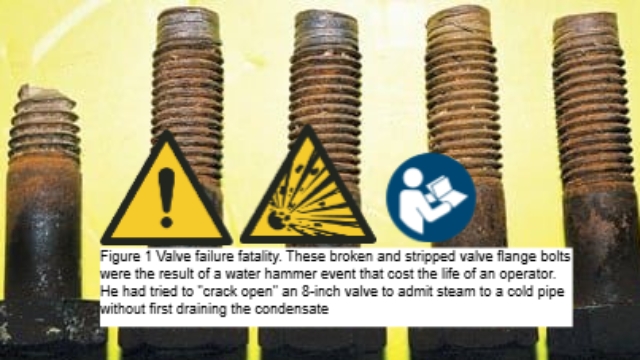
Some safety considerations for pressurizing steam lines.
1. Always Open the manual condensate drain on the header or section of pipe to be energised ensure all the water is removed before attempting to pressurise the system.
2. Always open steam valves slowly to reduce the pressure difference. Steam rapidly expands 400m/second about 1200km/hr this can produce 30bar pressure spikes from condensate water hammer. This pressure greatly exceeds the design pressures for the pipe and valves. People have been killed in industrial accidents due to steam systems failing due to rapid pressurisation of condensate flooded pipes.
Other problems less significant than death.
Thermal shock and cracking of valves, pipes, and gaskets due to sudden temperature change
Pressure surges that can damage pressure-reducing valves and downstream equipment
Loss of control and unsafe operating conditions for personnel
Slow opening allows the line to warm up gradually, condensate to clear, and pressure to stabilise before normal operation. Crack the valve open leave for 5min then open slightly more and leave for another 2-3minutes. Check that pressure is building up in the plant once above 2bar thermal shock risk is greatly lowered and condensate should no longer be present.
Finish opening the valve over 2-5minutes and then close by 1/2 turn.

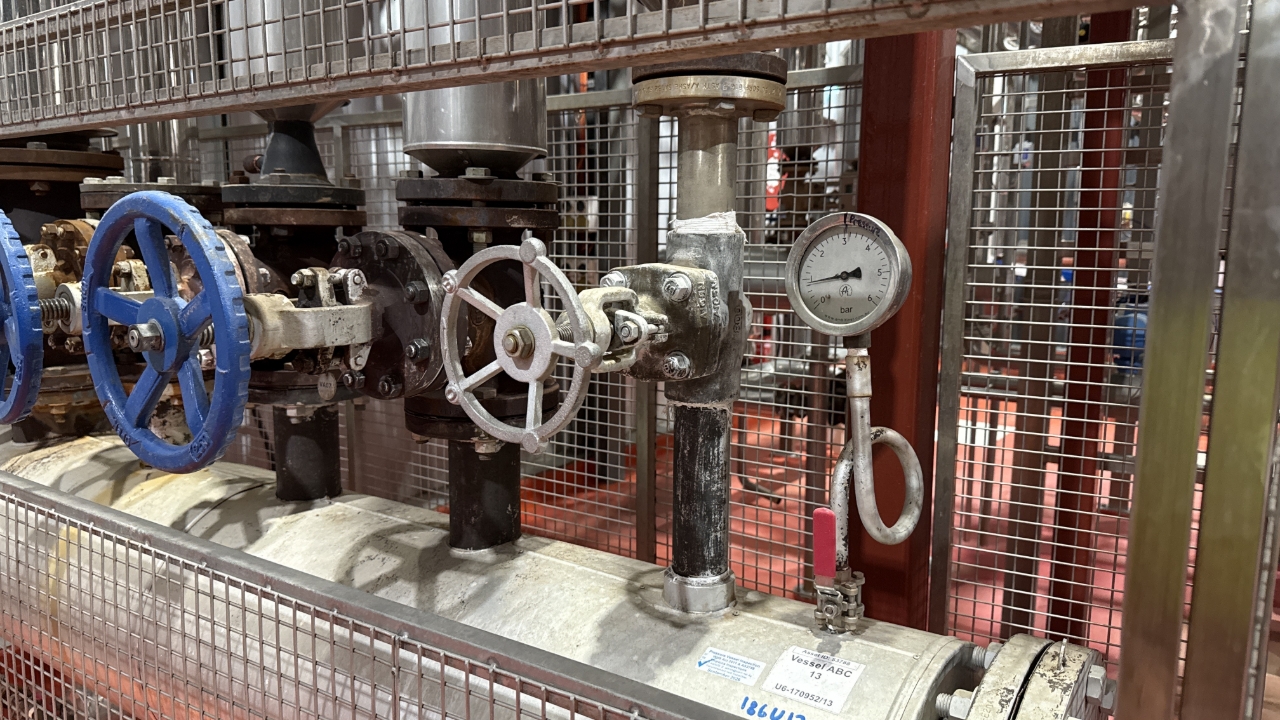
Condensate drains are typically installed on the lowest point in the steam system. The picture is of a thermal trap, it can be manually opened. In the closed position it will remove condensate it will close due to thermal expansion of the metal.
The design of the steam system is such that the condensate is removed well before water hammer conditions can occur.
Additional risk is present when introducing steam into cooled pipe work as the steam is rapidly loosing energy to warm the system, this can temporarily overwhelm the condensation drains and induce water hammer conditions.

Check the boiler HMI for active faults
Investigate fault reason -
Low water - check water pumps and water supply.
Low fuel pressure - check incoming fuel pressure
Reset Fault
Boiler restarts
If below 3bar low flame hold will be activated. You may need to close main steam outlet at back of boiler to allow pressure to build rapidly. Once high flame enables SLOWLY reopen the steam outlet. Take to full open then close by 1/2 turn

Main steam manifold
Pressure gauge right hand side
In from boiler on the left
Out to brewery on the right

Valve in closed position.
If starting from cold ensure condensate is removed before opening
Always open steam valves SLOWLY!!!

Valve in the open position. Remember when opening steam valves do it slowly then once the pressure has equalized, fully open then close by 1/2 turn. The valve will heat up expand and lock in the open position if left on the full open position.

Check the steam header near the brewhouse. In the photo you can see that the pressure is low. Should be 3-3.4bar
If it’s not check that the main steam in is open

Check that pressure is in the main line at the pressure regulator. Check that the isolation valve is open.
If no pressure and the valve is open then go to the boiler manifold boiler is off or header is isolated.
The Boiler also has isolation point on the top of the boiler this is sometimes closed for maintenance works

Isolation valve on top of boiler.
Open slowly 10bar is a lot of pressure

Processes not heating up within normal times can indicate vapour lock in Heat exchangers or insufficient condensate removal.
Check that the condensate pumps have air supply and that outlets from flash vessels are open.

Boiler feed water pumps
If you have boiler water level faults check that these are not isolated and that valves are open. Check for abnormal noise when running
Check kickback line at economiser is mostly closed (next step)

Kickback line is the small pipe on top. In this photo it’s in the correct position.