
Know your soil type
The main difference between a plate compactor and a rammer is the soil type you are compacting.
Cohesive soils: clays, silty clays, very fine material
Mixed cohesive soils: a little granular soil with a lot more cohesive soil mixed in
Granular soils
Match the machine to the soil
Granular soils: plate compactors work best.
Mixed and straight cohesive soils: rammers are the best product.
Get the moisture right
Moisture is critical for proper soil compaction.
You cannot just add moisture to the surface of the material you are compacting: it takes hours to permeate through the lift.
Ideally the material is moistened before placement and then after compaction.
Know the area limit for plates
A plate compactor, from the smallest to the largest, suits an area of roughly 5,000 sq ft (about 465 m²) of granular soil.
For anything over that, consider a smooth drum tandem roller, walk-behind or ride-on.
Know the lift depth
Lighter plates (200 lb / 90 kg class): about 4 to 6 in (10 to 15 cm) of decent compaction
Heavier reversible plates: about 6 to 12 in (15 to 30 cm)
Make enough passes
Wacker Neuson recommends a minimum of two passes. A pass is going one direction over the material you are compacting.
Two, three or four passes may be necessary to compact properly.
The machine tells you when it is done compacting: it bounces much higher than when it is still putting energy into the soil, and it has a different tone.
Where rammers fit
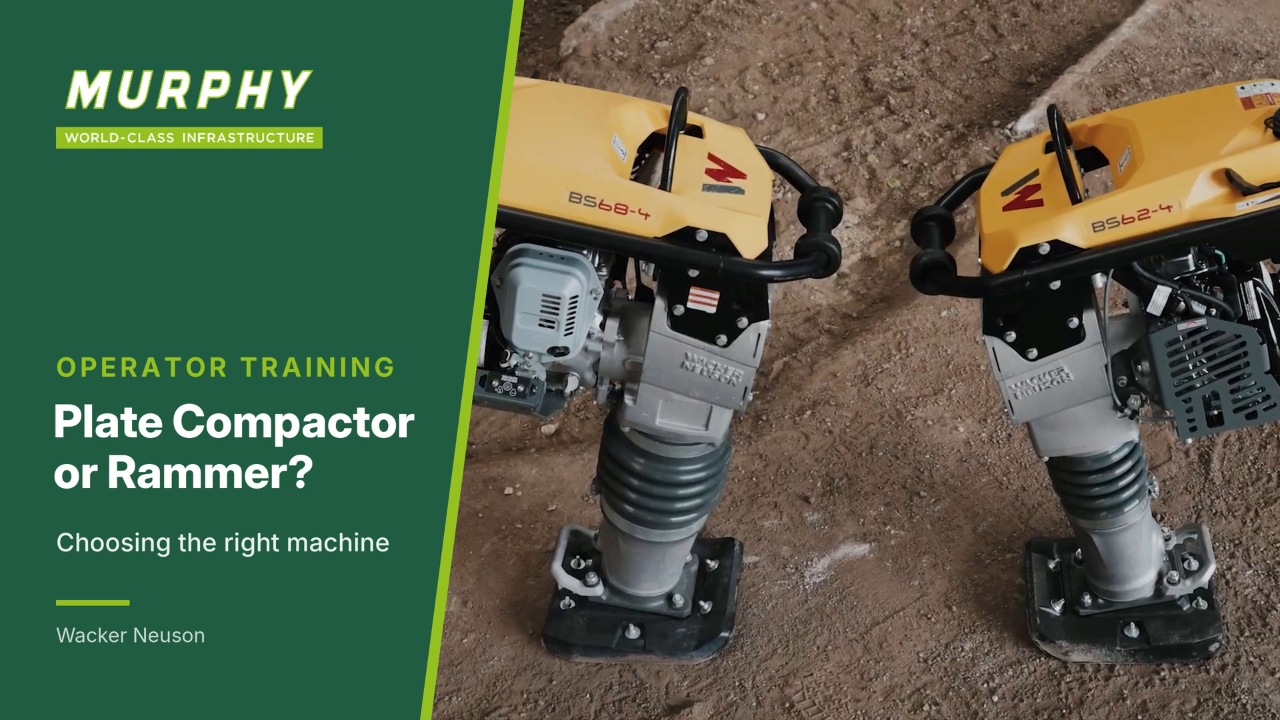
Rammers are used with cohesive and mixed cohesive soils, typically in shallow, narrow trenches.
For anything over about 3 ft (0.9 m) and over about 15 to 20 ft (4.5 to 6 m) long, consider a trench roller.
The critical elements
When deciding what type of equipment to use and how to use it properly, consider:
The machines
The soil type
The proper moisture content
The area, the lift depth and the number of passes