
Knowby
Loading a Flatbed Truck.
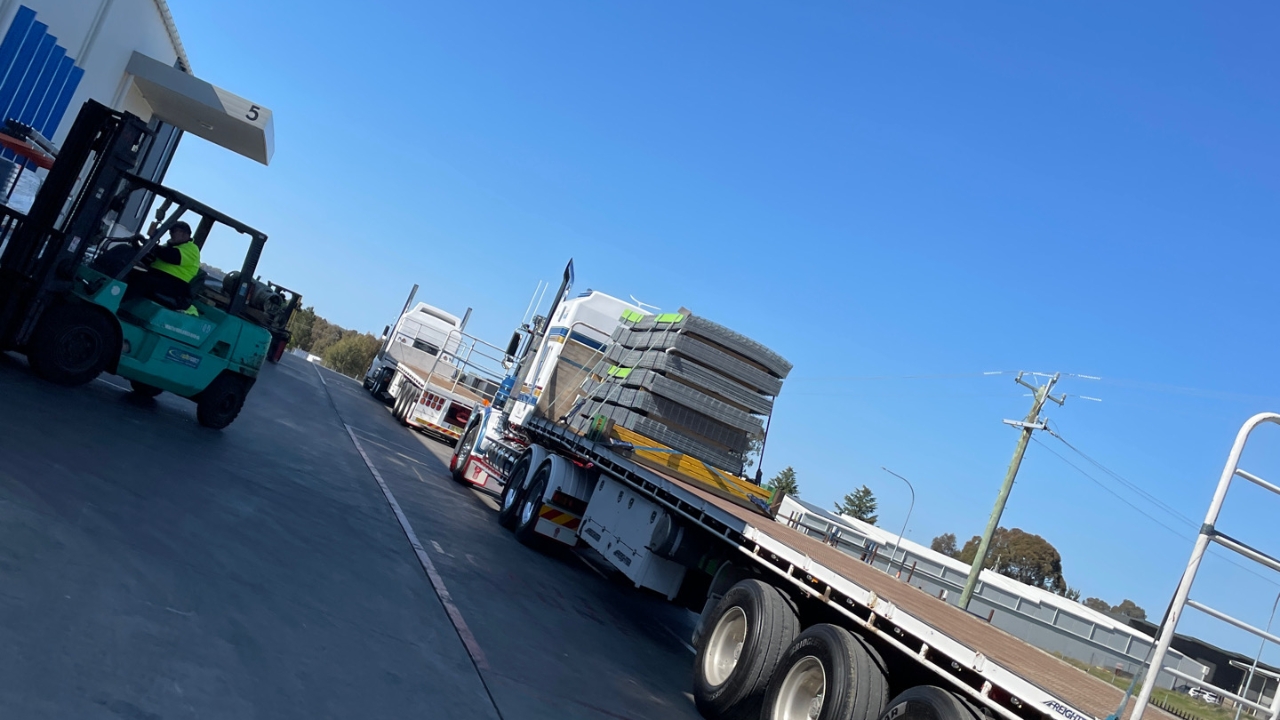
How to load a flatbed truck. This includes how to distribute the weight and how to restraint the load safely.
1
Step 1 of 17
<p>Personal Protective Equipment (PPE). Gloves and Safety Glasses. If you don’t already have a pair of gloves and safety glasses, please see the store worker.</p>

Personal Protective Equipment (PPE). Gloves and Safety Glasses. If you don’t already have a pair of gloves and safety glasses, please see the store worker.

2
Step 2 of 17
<p>Long bars are used for strapping down onto the truck. The strap goes over the top of the long bar so it doesn’t damage the items.</p>

Long bars are used for strapping down onto the truck. The strap goes over the top of the long bar so it doesn’t damage the items.

3
Step 3 of 17
<p>Short bars are used so other items can go on top. Such as 6 meter channel and 6 meter top hat.</p>

Short bars are used so other items can go on top. Such as 6 meter channel and 6 meter top hat.

4
Step 4 of 17
<p>Before starting to load, make sure the drivers place piece of rubber under the stillage feets to avoid slipping or moving of the stillages. Make sure to ask them before loading. Load each side one by one.</p>

Before starting to load, make sure the drivers place piece of rubber under the stillage feets to avoid slipping or moving of the stillages. Make sure to ask them before loading. Load each side one by one.

5
Step 5 of 17
<p>Try and keep everything as flush as possible to avoid stillages moving during transit.</p>

Try and keep everything as flush as possible to avoid stillages moving during transit.

6
Step 6 of 17
<p>Mark off the Job Tracker of every stillages loaded onto the truck. This will help in creating the deliver docket after the truck is loaded.</p>

Mark off the Job Tracker of every stillages loaded onto the truck. This will help in creating the deliver docket after the truck is loaded.

7
Step 7 of 17
<p>Make sure to communicate with the truck driver and they can help direct the loading of products.</p>

Make sure to communicate with the truck driver and they can help direct the loading of products.

8
Step 8 of 17
<p>Take photos of every pack/ stillage to keep track of everything such as the product itself and the condition it is in.</p>

Take photos of every pack/ stillage to keep track of everything such as the product itself and the condition it is in.

9
Step 9 of 17
<p>Usually, 6 meter packs goes on top of the stillages. So make sure the short bars are in place and all the stillages underneath are of same height and levelled. Also, help out the forklift drivers with directing the prorducts loaded. (e.g.) a little to the left, or push the pack in a little bit.</p>

Usually, 6 meter packs goes on top of the stillages. So make sure the short bars are in place and all the stillages underneath are of same height and levelled. Also, help out the forklift drivers with directing the prorducts loaded. (e.g.) a little to the left, or push the pack in a little bit.

10
Step 10 of 17
<p>Make sure not to load higher than the legal limit is. Also, keep Load Distribution in mind.</p>

Make sure not to load higher than the legal limit is. Also, keep Load Distribution in mind.

11
Step 11 of 17
<p>Make sure to keep in mind the weight of every stillage/ pack you load and how much weight is going on each side and how much weight is at the front and back of the trailer. Weight distribution is important.</p>

Make sure to keep in mind the weight of every stillage/ pack you load and how much weight is going on each side and how much weight is at the front and back of the trailer. Weight distribution is important.

12
Step 12 of 17
<p>Keep everything flush and make sure the stillage feets are inside the lips of the truck bed.</p>

Keep everything flush and make sure the stillage feets are inside the lips of the truck bed.

13
Step 13 of 17
<p>Make sure all the products are strapped to the stillage when it has more than 1 pack in it. (Example: this stillage has CNRs, RD Tracks and few Channel packs)</p>

Make sure all the products are strapped to the stillage when it has more than 1 pack in it. (Example: this stillage has CNRs, RD Tracks and few Channel packs)

14
Step 14 of 17
<p>Put on forklift tyne extension slippers/ extension jib which is placed behind the stillage with bars and stillage legs.</p>

Put on forklift tyne extension slippers/ extension jib which is placed behind the stillage with bars and stillage legs.

15
Step 15 of 17
<p>Lock the tynes into place.</p>

Lock the tynes into place.

16
Step 16 of 17
<p>The extension tynes are used for loading stillages on the truck when it needs to go across like shown in the photo.</p>

The extension tynes are used for loading stillages on the truck when it needs to go across like shown in the photo.

17
Step 17 of 17
<p>Be careful and slow when loading products on the top as the visibilty is low. Make sure you take photo of the full load (should cover all the stillages and pallets). It is now ready to go after the paperworks are given to the driver.</p>

Be careful and slow when loading products on the top as the visibilty is low. Make sure you take photo of the full load (should cover all the stillages and pallets). It is now ready to go after the paperworks are given to the driver.