
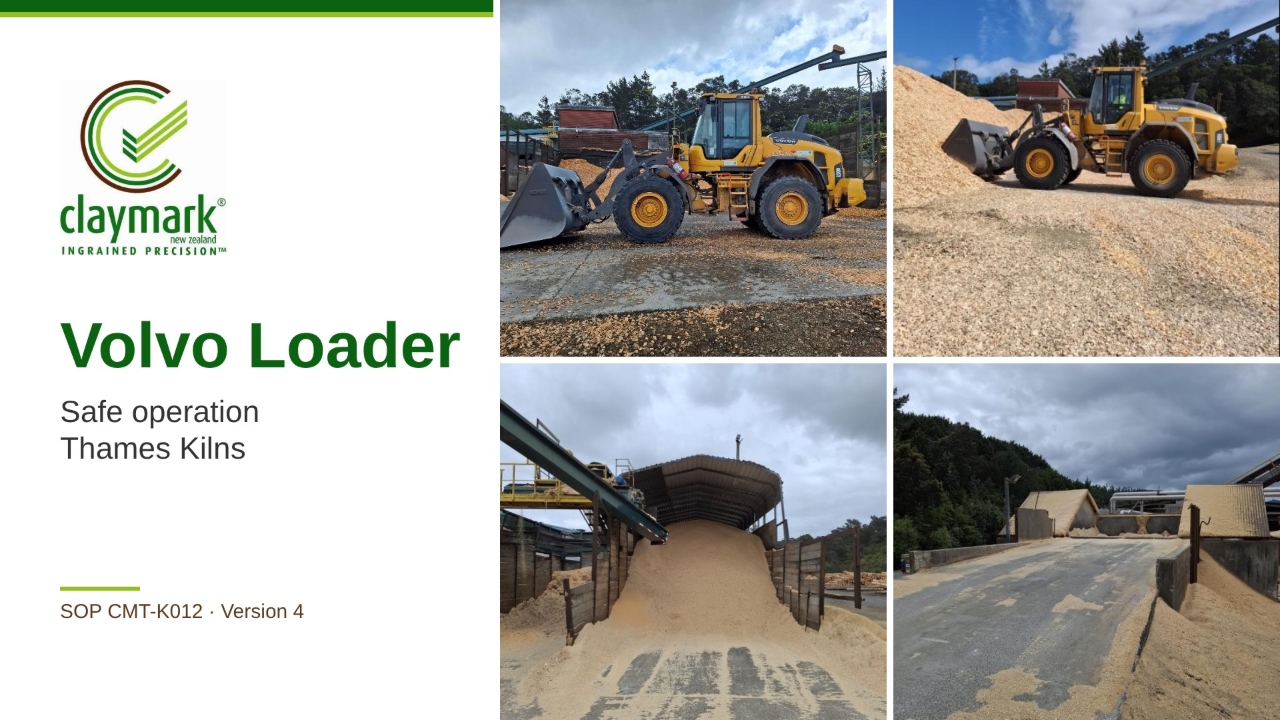
Hold a licence and company authorisation
Loader drivers must be licensed and authorised by the company to operate the loader.
Licence: You MUST hold a valid wheels, tracks and rollers licence to operate the loader.
Authorisation: You must be authorised by the company to operate the loader.
In training: While you are assessed as 'Introduction' or 'Under Supervision', a fully competent operator must be within sight at all times.
Wear the required PPE
You are required to wear the following PPE when working in or entering this area.
Footwear: Approved safety footwear.
High viz: Approved high viz.
Sawdust: Airborne sawdust and debris can cause eye and respiratory irritation. Always wear the appropriate PPE when required.
Loose clothing & long hair: Keep all loose clothing and long hair confined at all times.
Keep walkways and floors clear
Slips and trips: Keep obstructions out of walkways and clean up spills immediately.
Debris: Be aware of sawdust and wood chips on the floor; you may slip on them.
Housekeeping: Always follow proper housekeeping procedures to prevent general mess.
Respect isolation and lockouts
Lockout: Isolation of a workstation can only be done at the energy source (i.e. motor) or at a designated switch.
Padlocks in place: Check with the person who isolated the machinery as to why.
Moving chains and belts: These start automatically when the machine is on. ALWAYS isolate before clearing hand and tangle-ups.
Electrical current: Only trained maintenance staff can access the electrical cabinets and machine control centres (MCCs).
NEVER remove an isolation padlock from machinery if you did not place it.
Watch for people and mobile plant
People around you: Be aware of any people around the area and make sure nobody is in your way.
5-metre rule: Maintain the 5-metre rule when in operation.
Your team: Know where your team members are. Always notify or check in with them before work that may affect yourself or others.
Mobile plant (forklifts): Keep clear of loading and unloading zones. ALWAYS give way to mobile plant. Be wary at all times: the driver might not see you.
Protect your hands and body
Pinch points: Do not place hands or body parts close to any moving parts of machinery.
Splinters: Dry timber is prone to splinters. Never slide timber through your hands or against your body. ALWAYS wear gloves, mitts or a leather apron for slivers.
Packets and pieces falling: Make sure packets are sitting in a stable position.
Strapping: Straps may break, causing cuts and/or other injury.
Compressed air: Never blow compressed air onto skin. It can force air bubbles into the veins, causing heart attack and stroke.
Manage fatigue and report hazards
Fatigue: Tiredness and repetitive tasks cause fatigue. Rest or rotate tasks and take regular breaks.
Feeling fatigued: Always tell your supervisor.
Hazards: Report any potential hazard to your supervisor immediately.
Lock out a damaged or faulty loader
Damaged or faulty: If the loader is damaged, faulty or not working as it should, lock it out and do not use it.
Report: Advise your Manager/Supervisor.
Open the engine hood
Method
Go to the access ladder and open the small control box.
Press the up arrow to lift the hood.
Press the down arrow to close it.
Check water, oil and tyres
Once the hood is open
Check water.
Check oil.
Check tyres.
Get in and out with 3 points of contact
Steps: Use the steps on the left-hand side of the machine to enter and exit the loader.
3 points of contact: Always maintain 3 points of contact when entering and exiting.
Seat belt must be worn at all times when operating the loader.
Start the machine and release the park brake
Method
Start the machine.
Switch to release the park brake.
Never leave a machine while it is running.
Drive to the site rules
Speed in the yard: 20 km/h
Speed inside sheds: 5 km/h
Bucket: No personnel are to be carried in the bucket of the loader.
Pillion passengers: None allowed in the cab, unless a certified pillion passenger seat is provided.
Load a truck
Method
Drive forward into the pile to fill up the bucket.
Tilt the bucket back, reverse from the pile and drive forward to the truck.
At the truck, lift the bucket above the truck.
Drive forward and tilt the bucket forward to empty the load.
Repeat until the truck is full.
Truck driver must remain in the truck, or stay at a safe distance where they can be seen by the loader driver.
Take sawdust from the shed
When taking sawdust from the shed, be aware that the conveyor overhangs the shed.
Fill the sawdust bunker and close the doors
Fill level: Do not fill over the bars. It puts too much pressure on the moving floor.
When the bunker is full
Close the bunker doors.