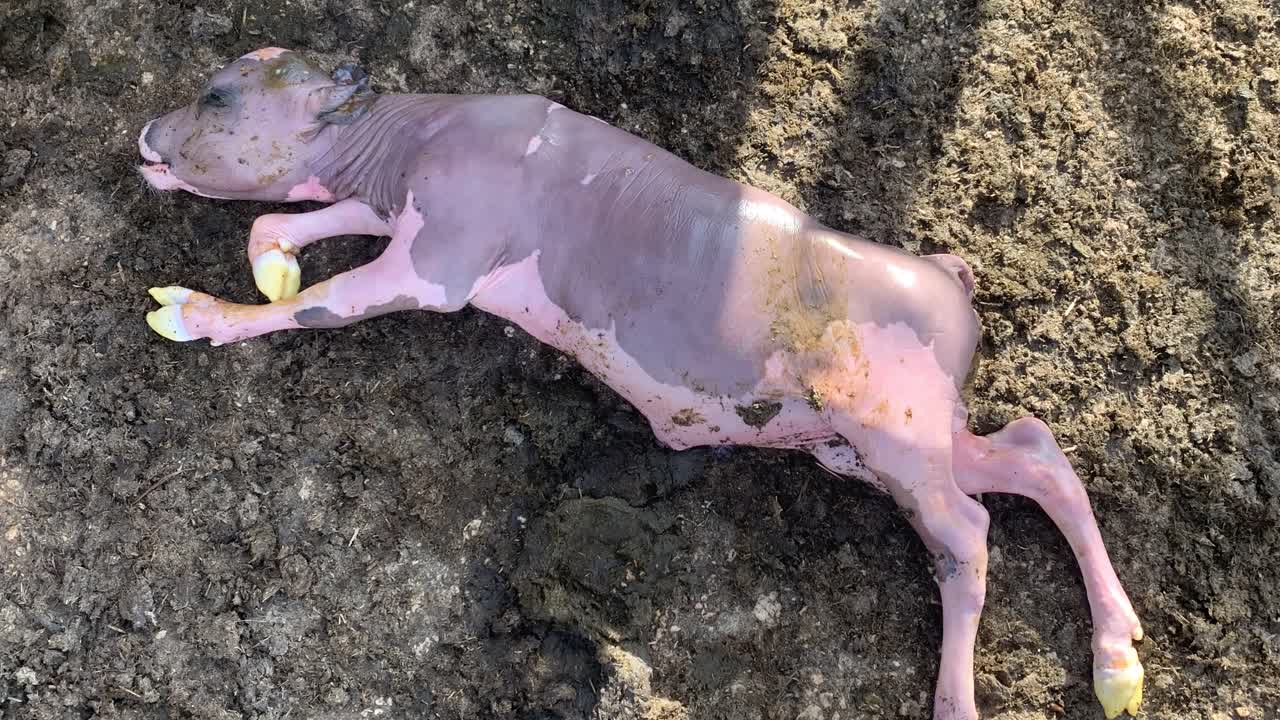

When you think a cow is or has aborted they’ll often have their tail raised and sometimes have a membrane hanging out.
The question is “what do I do about it?”

The first critical thing to do is make sure she doesn’t have a foetus still inside her. Using a glove and lube do an internal exam.
If the foetus remains inside the cow infection will generally always occur and the cow will get sick and risk death.

If a foetus is present gently remove it. ALWAYS check for a second one.
Pain relief is recommended.

Watch the cow over the coming days and if the temperature risers above 39.5 she needs a course of antibiotics. My choice would be tetracyclines.
There are a number of causes of abortion ( eg mouldy hay and silage ) and the next question is “when do I start to worry?”. For me when numbers hit 3% I’d be investigating with your vet.

Non infectious causes include: Heat stress ( not uncommon to see embryos popping out during milking in extreme heat, yard cooling helps ) Genetic reasons. Toxins like pine needles.
There are numerous infectious causes. The more common ones are covered here.
Pesti / BVD In early pregnancy we see embryonic loss shown as long returns. From day 40 - 125 the foetus becomes a PI carrier. After 125 days it may abort. Diagnosis is hard but rising antibodies over time is indicative. Embryo spleen for virus.
Consider vaccination or elimination program.

Listeria: From mouldy hay / silage usually. At any stage of gestation. Can be sporadic or mass outbreak. Cow may have fever and not eat leading into it. A rotten foetus and RFM is very common. Culture from membrane or foetus. white spots on cotyledon
Avoid mouldy hay / silage if outbreak.

Fungal abortion: Abort from 4 months on. Mouldy hay and silage. Usually the foetus isn't rotten and often has grey ringworm like skin lesions on the head and shoulders. Isolate fungi from placenta and foetus.
Avoid mouldy hay / silage if outbreak.
Lepto: This shouldn't occur with a 7 in 1 vaccination program. If abortion occurs it is in late gestation. It is a disease that infects humans with poor outcomes.
Treat sick cows with antibiotics. Bottom line don't forget to vaccinate!

Neospora: Bacteria carried by dogs. Can occur from 3 months but is most common 4 -6 months. Can be sporadic or a mass outbreak. Cows usually not ill. The foetus is usually rotten or mummified and RFM is uncommon. Isolate in foetus tissues.
No treatment. No vaccine. Avoid dog faeces contamination.