
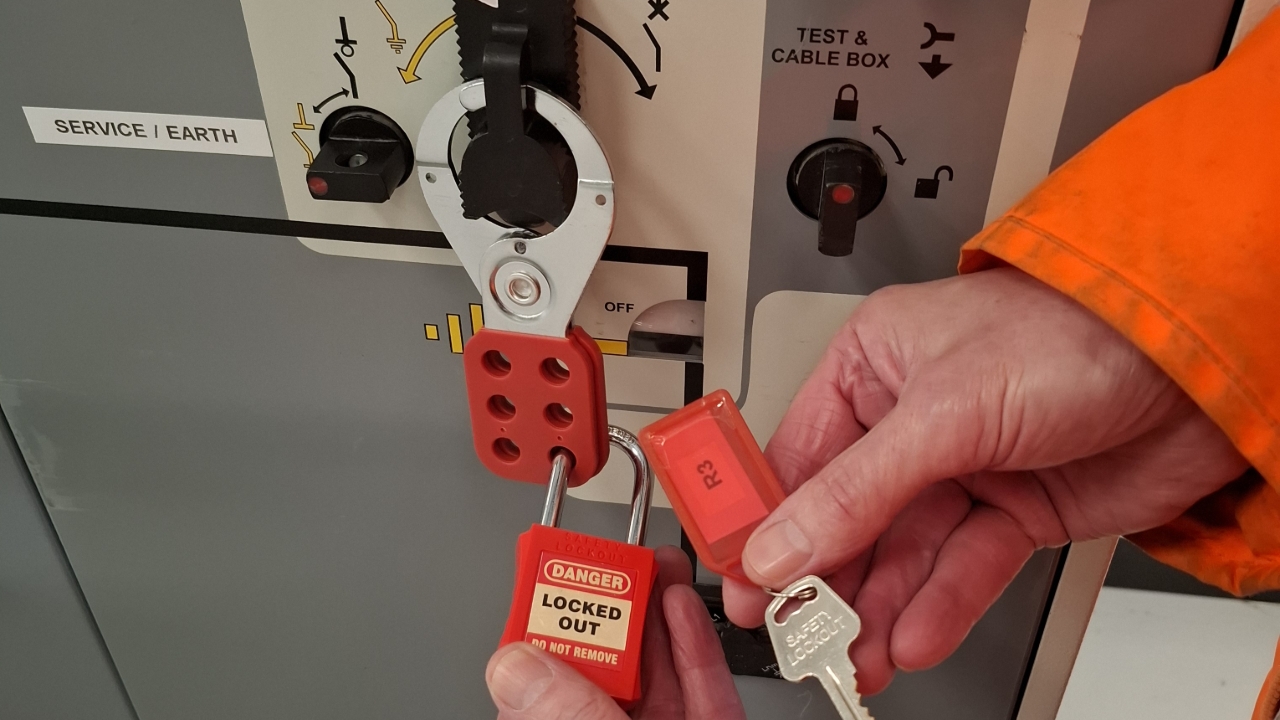

Lockout / Tagout Details

Compliance
Electrical Safety Awareness & Compliance
HSE documentation
Important: Prior to proceeding with any interaction with live switchgear ensure; that you are fully up to date on the following regulation and guidance, that a full risk assessment has been carried out, that switching is carried out by approved personnel and the relevant PPE is worn.
Arc Guard PPE
Regulations / Guidance
These are the main laws & published guidance documents you must refer to:
Electricity at Work Regulations 1989 (EAWR) — requires electrical systems, including switchgear, to be constructed, maintained and operated in such a way as to prevent danger.
Health and Safety at Work etc. Act 1974 — general duty on employers to ensure safety, so far as is reasonably practicable.• Management of Health and Safety at Work Regulations 1999 — require risk assessment & management of risks.
HSG230 “Keeping Electrical Switchgear Safe” — detailed guidance on medium and high voltage switchgear: selection, use, operation, maintenance, risk factors etc.
HSE+1INDG372 “Electrical switchgear and safety” — a more concise guide for users/owners of switchgear.• HSG85 “Electricity at Work: Safe working practices” — for how to devise safe working practices, safe systems of work, competence etc.

Risk of electric shock - authorised and trained personnel only.
Purpose: This procedure establishes the minimum requirements for the lockout of energy isolating devices whenever maintenance or servicing is done on machines or equipment.
Scope: This procedure shall be used to ensure that the machine or equipment is stopped, isolated from all potentially hazardous energy sources and locked out before employees perform any servicing or maintenance where the unexpected energisation or start-up of the machine or equipment or release of stored energy could cause injury.
Authorisation:
This procedure shall only be used by employees that have been trained as "Authorised" employees. Employees with the following job roles are authorised to use this procedure:
Enforcement: Failure to properly follow lockout-tagout procedure may result in corrective action.
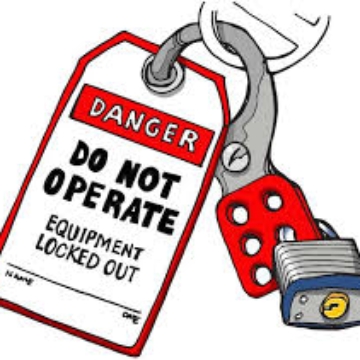
Lockout Application Process

Return to Service Steps