Knowby Clovelly
Knowby
Identify Unmilked Cows
1
Step 1 of 19
<p>In Max Time milking, a cow is considered milked once a working set of cups has been properly attached for a full lap of the platform, set at an appropriate speed, or if the cups detach automatically.</p>

In Max Time milking, a cow is considered milked once a working set of cups has been properly attached for a full lap of the platform, set at an appropriate speed, or if the cups detach automatically.

2
Step 2 of 19

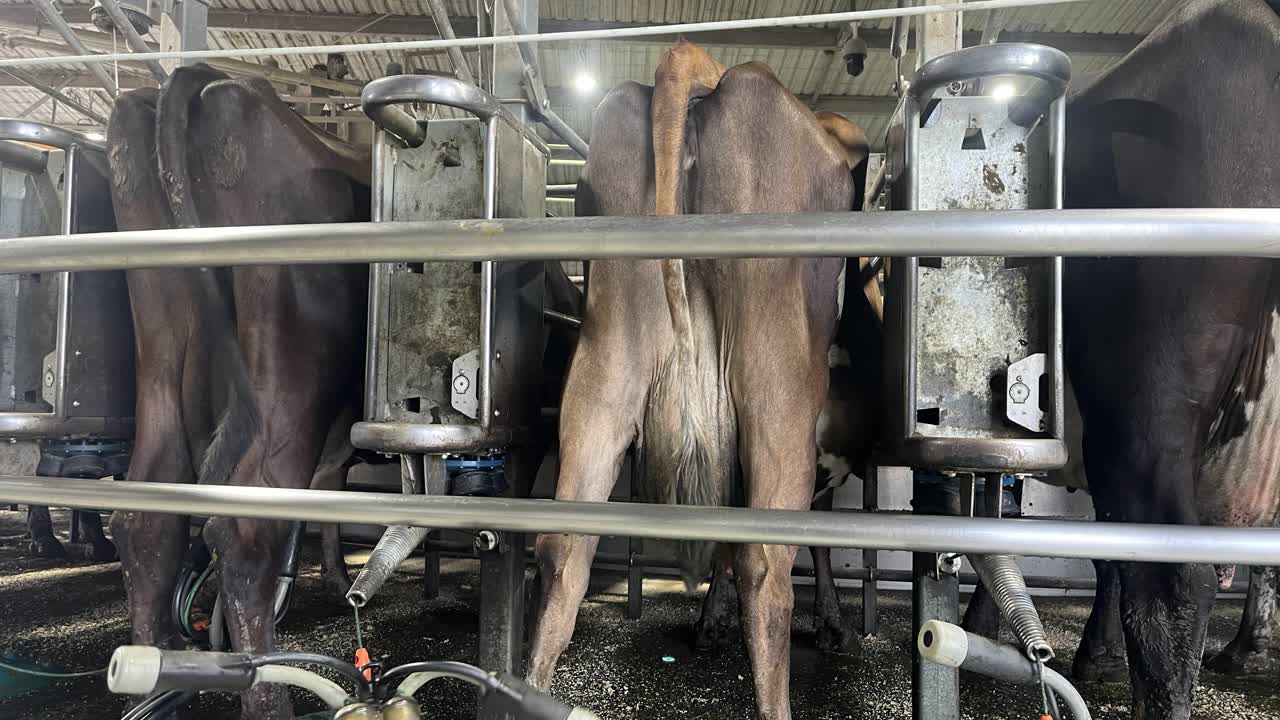
Cows must not leave the platform until they have been milked.

She has NOT been milked when:

3
Step 3 of 19
<p>Platform speed is too fast.</p>
<p>Ask your manager what the platform speed is. Communicate with your milking partner to achieve and maintain speed throughout milking.
Inform team leader if more than 10% of clusters are being removed.</p>

Platform speed is too fast.

Ask your manager what the platform speed is. Communicate with your milking partner to achieve and maintain speed throughout milking. Inform team leader if more than 10% of clusters are being removed.

4
Step 4 of 19
<p>Clusters are not functioning properly.</p>
<p>Vacuum and pulsation check must be completed before the start of milking. If you suspect a cluster is not working during milking; test vacuum and pulsation. If repairs cannot be completed contact your supervisor immediately.</p>

Clusters are not functioning properly.

Vacuum and pulsation check must be completed before the start of milking. If you suspect a cluster is not working during milking; test vacuum and pulsation. If repairs cannot be completed contact your supervisor immediately.

5
Step 5 of 19
<p>Cow is cupped on too late or taken off too early.</p>
<p>Adhere to correct cupping method at all times. Cup cows within designated cupping zone. Remove cups as late as possible.</p>

Cow is cupped on too late or taken off too early.

Adhere to correct cupping method at all times. Cup cows within designated cupping zone. Remove cups as late as possible.

6
Step 6 of 19
<p>Cups are kicked or fall off early.</p>
<p>Ensure cows are cupped correctly FIRST TIME - refer to the correct and safe cupping method.</p>

Cups are kicked or fall off early.

Ensure cows are cupped correctly FIRST TIME - refer to the correct and safe cupping method.

7
Step 7 of 19

Muddy teats preventing cups attaching properly.

Clean teats with paper towel before attaching cups. Inform team leader immediately if more than 50% of cows have muddy teats.

8
Step 8 of 19
<p>Signs a cow has NOT been milked:</p>

Signs a cow has NOT been milked:

9
Step 9 of 19
<p>Full, bloated quarters.</p>

Full, bloated quarters.

10
Step 10 of 19
<p>Teat end is closed.</p>

Teat end is closed.

11
Step 11 of 19
<p>Milk leaking from one or more teat ends.</p>

Milk leaking from one or more teat ends.

12
Step 12 of 19

Milk gushing out of teat end when gently squeezed between thumb and index finger.

13
Step 13 of 19
<p>Retention bar down: Milk yield has not been met.</p>

Retention bar down: Milk yield has not been met.

14
Step 14 of 19
<p>Uneven quarters: check cups are vacuuming and pulsating and check quarters for mastitis.</p>

Uneven quarters: check cups are vacuuming and pulsating and check quarters for mastitis.

15
Step 15 of 19
<p>Signs a cow HAS been been milked:</p>

Signs a cow HAS been been milked:

16
Step 16 of 19
<p>All quarters are empty and appear saggy.</p>

All quarters are empty and appear saggy.

17
Step 17 of 19
<p>Teat end is open but not leaking milk.</p>

Teat end is open but not leaking milk.

18
Step 18 of 19

Milk does not gush out when the teat is pinched between thumb and forefinger.

19
Step 19 of 19
<p>Retention bar is up.</p>

Retention bar is up.