
Visual Inspection of Pump and Assembly: What to Look For
1
Step 1 of 18A visual inspection should start at the bottom of the machine, where inertia blocks or bases provide a solid flat mounting surface for the machine.
2
Step 2 of 18Begin by checking for cracked concrete bases or support columns and water seeping between the base plate and concrete foundation.
3
Step 3 of 18Next, make your way upwards to the skid. The skid or frame should be solidly bolted to the base.
4
Step 4 of 18During your inspection, confirm that all bolting is tight.
5
Step 5 of 18Concrete bases can shrink, leading to gaps under the frame.
6
Step 6 of 18Shims should be installed under the motor feet. They should be pulled back slightly, so the bolt's threads don't bend the shim when they are tightened.
7
Step 7 of 18Painted, rusty, or otherwise tarnished shims should be replaced with clean, stainless shims.
8
Step 8 of 18In many instances, isolator springs are used between the frame and the base, especially when the machine is located off-grade or on an upper floor or roof.
9
Step 9 of 18Isolator springs are sized according to the mass of the machine they are supporting.
10
Step 10 of 18They should be adjusted to have the proper spring compression to keep the machine vibration from reaching the base and causing unwanted noise.
11
Step 11 of 18If you do not know the proper compressed height, step on the machine to see how springy the isolators are.
12
Step 12 of 18If they move easily, check with your supervisor or engineering department to confirm that they are adjusted correctly.
13
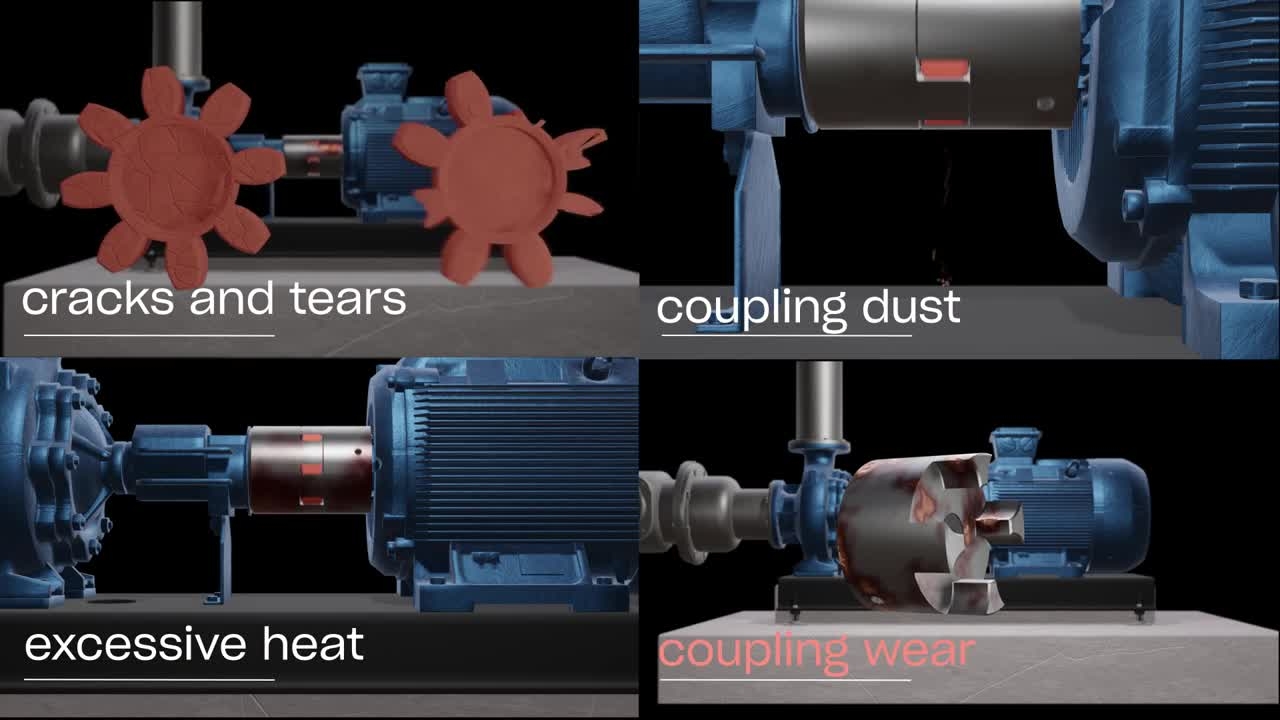
Step 13 of 18Next, inspect the couplings. Often times you can determine if a coupling is misaligned by simply looking at it.
14
Step 14 of 18Symptoms of misalignment to look for in the couplings include cracks or tears, coupling dust, changing of color due to excessive heat, and wear on coupling teeth.
15
Step 15 of 18Make sure to check the pipe systems to locate potential influences caused by broken, loose, missing, or incorrectly spaced pipe hangers.
16
Step 16 of 18The weight of the piping on the pump when pipe hangers are missing or incorrectly spaced can cause deformation of the pump housing and the base.
17
Step 17 of 18When a process pipe is in operation and the line is full, there can be a great deal of weight change from when the piping is empty while doing an alignment.
18
Step 18 of 18Lastly, properly support the piping and follow the piping manufacturer recommendations on location and distance between hangers.