

Identify / Protect
When a spill has occurred it is important to identify what the chemical is to safely enact a response plan. This should only be done if safe to do so by either visually identifying the drum/container or by asking the user of the chemical.
⚠️ Do not enter the area of spill without an appropriate level of PPE
Vacate non-essential personnel
Determine the minimum level of PPE required, this can come from the PPM for generalised initial information or the SDS for exact requirements (note: when dealing with spills the SDS should always be consulted)
Barricade area wide enough to contain the spill and additional area of gas/fumes are present (refer SDS), known as the ‘Hot Zone’. This will prevent others walking into the area
Inform Supervisor
If spill is large and cannot be safely contained or the chemicals involved pose a serious danger to staff 000 should be notified

Containment
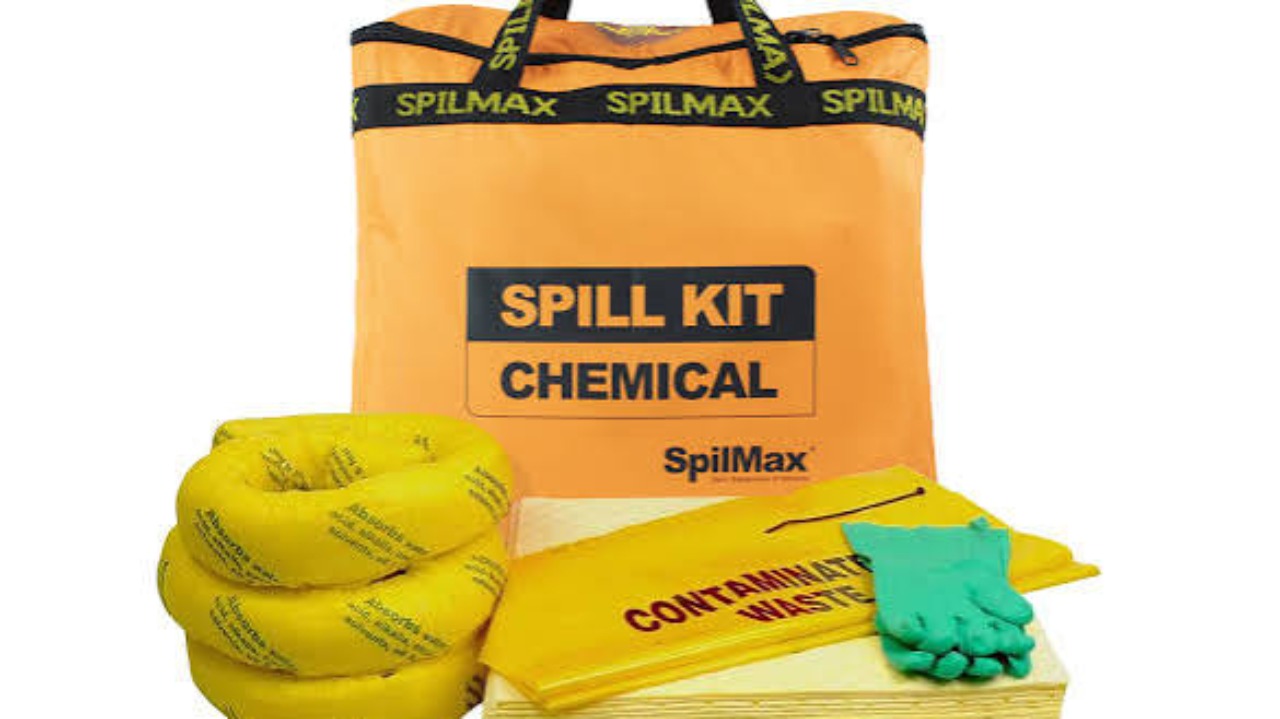
With correct PPE donned, obtain Spill Kit and bring to area
If safe to do so, stop the leak or flow to prevent further chemical flow. This can include placing a suitable bucket under the flow or placing the leaking container into a larger container (that’s big enough to contain all the chemical). Ensure the new container is compatible with the spilt chemical
Contain the flow of the split chemical using the items in the spill kit, the absorbent booms can be used to create a dam/bund and to prevent flow to drains. Sand/Perlite can also be used to contain. Absorbent pillows can be used to soak up chemical (see clean-up section before using)
Prevent flow into drains. Once contained it may be decided during clean up phase the spill can be sufficiently diluted to drain

Clean up
The clean up of any spills should be based around information contained within the SDS. However a number of generalised procedures are possible based on the nature of substance spilt as long as previous steps have been followed
Be aware of fumes and vapour emitted by the spill, good ventilation is required and additional respirators may be required
Solids
Solids should be swept up with a dustpan and broom
The area of the spill should be washed down with water to ensure no residue remain
The collected solids need to be disposed of as solid waste (see SDS), do not return to container
Liquids/Oils
Contain spill, use appropriate absorbent materials to soak up liquid (such as pillows, pads sand, spagsorb)
Place absorbents starting from the outside of the spill and working inwards
Place used absorbent material onto a container that is compatible with split product and seal
Clean up area with copious amounts of warm soapy water
Inorganic Acids and Base Solutions
Contain the spill with appropriate barrier material
➡️ In the case of Acids over 10% concentration the spill should be neutralised by the careful addition of a solid base such as Sodium Bi Carbonate, enough should be used to absorb all of the liquid
➡️ In the case of Bases of 10% concentration the spill should be neutralised by the careful additional of a solid acid such as Tartric or Citric Acid. Enough should be used to absorb all of the liquid
✅ Once Neutralised any solids should be scraped up and disposed of as a sloid waste and the area thoroughly washed down with copious amounts of water
✅ Barrier material must be disposed of as if it was the pure substance split. Disposed of in solid waste with appropriate precautions
✅ For Acids and Base solutions of concentrations less that 10% the spill may be washed directly to drain with copious amounts of water

Dispose / Report
Absorbent booms, pillows etc can be placed in a suitable container or disposal bag and sealed
Waste will be removed by external contractor unless it can be dealt with in house (WHS Manager to advise)
Once spill has been fully cleaned up remove barricades and return all tool equipment used
Complete an Incident Notification
Complete the reorder form (located in spill kit) and hand to manager to resupply the spill kits used