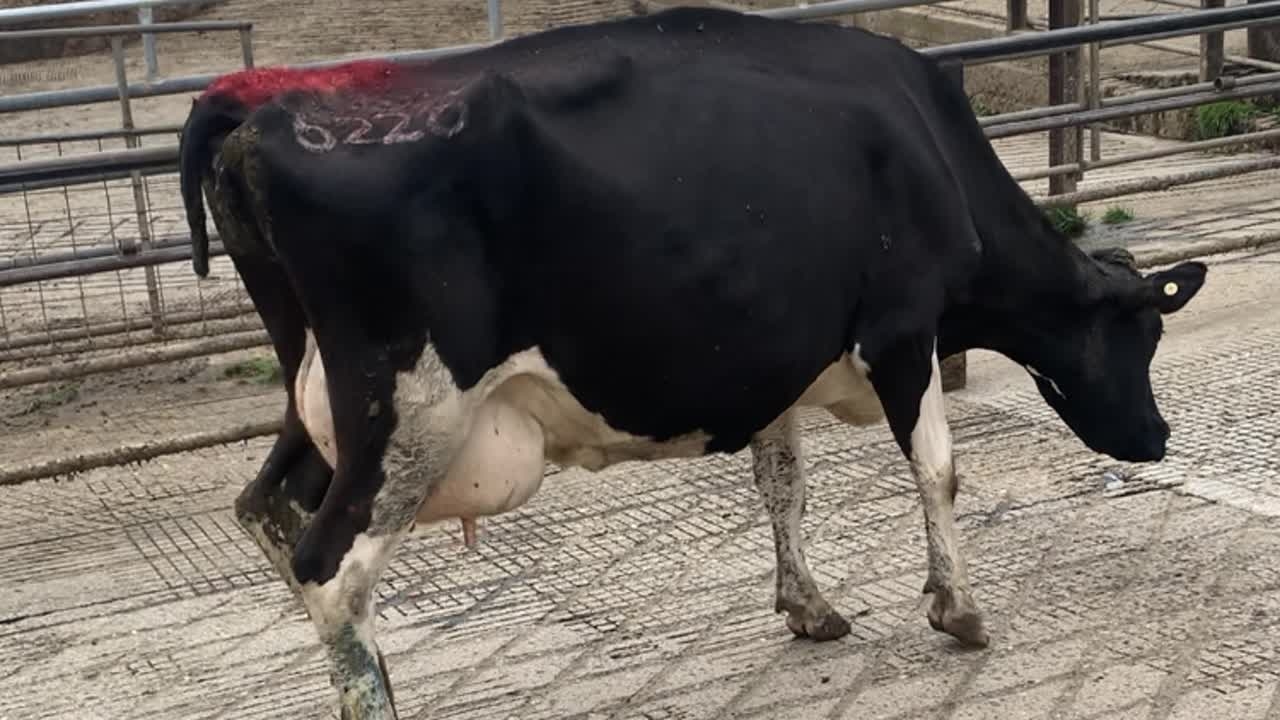
Safely lift the leg
LAME COWS ARE A WELFARE ISSUE AND NEED TREATED AS SOON AS SEEN.
Lame cows generally slow and are at the back of the herd. It's a good idea to have paint when bringing cows in so you can mark them.

Cows with front foot lameness lift their heads when the lame foot goes down to relieve weight.
Cows with hind foot lameness lower their heads and take short steps.
The 90:90:90 Rule 90% of lameness occurs in the hind foot. 90% of hind foot lameness is in the outside claw. And for 90% of the season it is white line.
To examine: Firstly lift the foot and clean it thoroughly.

Is the foot swollen?
Is the foot hot?
Is the skin broken between the claws?
This is where footrot occurs
If these signs occur use this link
Scrap off the top layer of sole with a knife or grinder. Note use of a grinder is a skill that requires training and experience.
Is there signs of reddening on the sole?
If you push with your thumb can you push the sole in?
This is how you find bruising.

Check the whiteline for faults, discolouring or holes ( especially the outside of the outside claw ). This is where most whiteline occurs.
Check the whole sole for small holes or dark patches. Pay particular attention to the front third of the sole. This is how you find sole penetration.
If you find nothing in the foot it may be an injury higher in the leg.
There are four main types of lameness.

White line disease is the most common form of lameness. It generally starts to appear late spring onwards. The join between the wall and sole weakens and stones force their way into the crack. This is usually on the outside claw of the hind foot but sometimes on the inside claw of the front foot in heifers.

Sole penetration is caused by sharp objects ( like stones on the yard ) penetrating the sole. It usually occurs in the front third of the sole. Often all you see is a small dark mark. It has usually under run the sole and formed a large abscess.

Bruising is very common at calving ( and other wet periods ) and especially so in heifers. If you push on the sole it will easily push in. There is usually reddening patches. Again usually it involves almost all the feet of the animal involved.

Footrot occurs at all time of year in wet conditions or where wet areas ( think edges of laneways and gateways ) are continually found on farms. Small stones penetrate the soft tissue between the claws. They are swollen and hot and very painful.