
What is Pixel Pitch
So, what is Pixel Pitch? And what does it really mean for you? Let's take a quick look at this basic term and how it should inform your decisions.
So, what is Pixel Pitch? And what does it really mean for you? Let's take a quick look at this basic term and how it should inform your decisions.
1
Step 1 of 15To start, let's define a pixel. In the LED display industry, a pixel is a cluster of light-emitting diodes that represents the smallest addressable element in a display image.
2
Step 2 of 15Typically, there are three LEDs in each pixel – one red, one green, and one blue.
3
Step 3 of 15As each LED is driven to various levels, the pixel, and overall display, is capable of displaying trillions of colors.
4
Step 4 of 15Pixels are usually spaced out evenly on a display surface. The distance between pixels, measured from one pixel's center to the next, is known as Pixel Pitch.
5
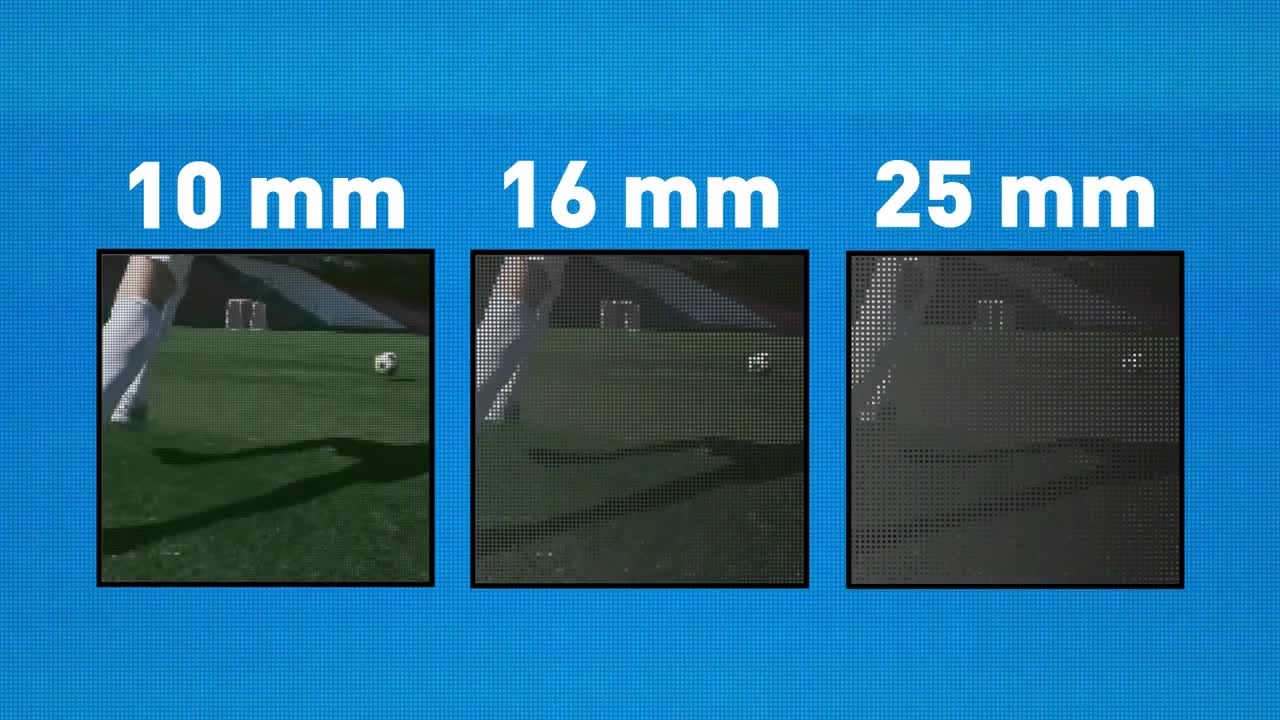
Step 5 of 15Pixel Pitch is typically measured in millimeters, and for reference, there are slightly more than 25 millimeters in one inch.
6
Step 6 of 15The smaller the pixel pitch, the closer the pixels to each other, meaning there are more pixels overall, increasing resolution and image clarity.
7
Step 7 of 15If you increase the pixel pitch, the pixels are spaced farther apart, resulting in less pixel density.
8
Step 8 of 15Let's look at an example. Here we have an LED panel measuring 12 inches high by 12 inches wide, or one square foot.
9
Step 9 of 15With a 10 millimeter pixel pitch, we have 30 pixels high and 30 pixels wide, or 900 pixels.
10
Step 10 of 15Using the same size panel, if we reduce the pixel pitch to 5 millimeters, we now have 60 pixels high and 60 pixels wide, quadrupling our pixel density to 3600 pixels per square foot.
11
Step 11 of 15As you can see, our image quality is now considerably better. For displays where the viewer will be close range, a tighter pixel pitch usually makes the most sense.
12
Step 12 of 15For some applications, however, a wider pixel pitch may be a more practical and cost efficient option.
13
Step 13 of 15But viewing distance isn't the only consideration. Distance from grade, ambient conditions, total surface area, content detail, competition with other media, branding goals, and much more can be important factors.
14
Step 14 of 15SNA offers an industry leading range of pixel pitches for both interior and exterior applications, from more than 25 millimeters to less than one millimeter, giving our customers plenty of options.
15
Step 15 of 15You should work with a knowledgeable LED display manufacturer that can help you determine what pixel pitch works best for your needs.